
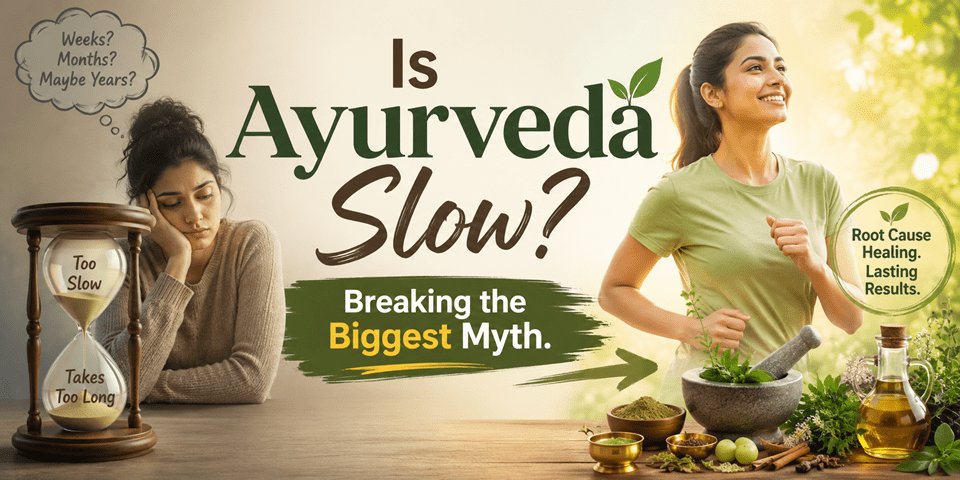
Is Ayurveda Slow? Breaking the Biggest Myth
One of the most common statements you’ll hear is: “Ayurveda works, but it’s too slow.” This belief has been repeated so often that many people accept it as fact—without ever questioning it. However, at Kalpataru Ayurvediya Chikitsalaya™, we see a different reality.
Under the expert guidance of Dr. Manoj M. Deshpande, Best Ayurvedic doctor in pune with over 25 years of clinical practice, we provide high-quality care that targets the root cause of diseases. Whether treating chronic skin conditions or metabolic disorders, Dr. Manoj Deshpande (B.A.M.S.) utilizes his deep expertise to ensure that treatment is as efficient as it is effective. The real answer to “how fast it works” depends on the nature of the ailment and the holistic path chosen for the patient.
What Ayurveda Actually Aims to Do?
Ayurveda is not designed for quick fixes alone. Its primary goal is to identify and correct the root cause of disease, not just suppress symptoms.
It works on principles like:
- Body constitution (Prakriti)
- Digestive strength (Agni)
- Toxin accumulation (Ama)
- Balance of doshas
Because of this depth, Ayurveda often takes a structured and personalized approach, which people sometimes mistake for slowness.
Where the "Slow" Myth Comes From?
1. Treating the Root Cause Takes Time:
In chronic conditions such as:
- Psoriasis
- PCOS
- Rheumatoid arthritis
- Eczema
- Acid peptic disorder
- Varicose Veins and many more
…the disease has usually developed over months or years. Expecting complete reversal in a few days is unrealistic—regardless of the treatment system.
Ayurveda works by gradually correcting internal imbalances, which naturally takes time.
Many times, to get quick relief, people take strong antibiotics, high-dose painkillers, or fever medicines and continue their routine without giving the body enough time to heal. This temporarily suppresses symptoms and creates a false feeling that the disease is improving.
However, because the disease is not given proper time to heal, it may later return in a different or more severe form. Some conditions require adequate healing time, and once you understand this, it becomes clear why Ayurveda may take slightly longer—it is allowing true recovery, not just masking symptoms.
2. Comparison with Instant Relief Treatments:
Modern treatments often rely on medications like steroids, antibiotics, or painkillers that act quickly on symptoms.
This creates a perception:
- Fast relief = better treatment
- Gradual improvement = slow treatment
But fast relief does not always mean long-term healing.
3. Lack of Proper Compliance:
Ayurveda is not just about medicines. It includes:
- Diet changes
- Lifestyle correction
- Daily routines
If these are ignored, results slow down significantly. In many cases, the issue is not Ayurveda—but incomplete adherence to treatment.
The Reality: Ayurveda Can Work Fast
There are many situations where Ayurveda delivers quick results when applied correctly.
There are several conditions where Ayurveda works very fast and gives visible results in a short time when the right treatment is applied.
Examples of Fast-Acting Ayurvedic Results:
- Abscess (including recurrent and diabetic abscess): With therapies like leech application (Jalaukavacharan), swelling and pain can reduce quickly, and internal medicines help reduce recurrence.
- Severe pimples with pus and itching: Even in patients suffering for years, noticeable improvement can be seen within 2–3 weeks with proper Ayurvedic treatment.
- Menopausal heavy bleeding (where hysterectomy is advised): In many women, bleeding can be controlled within 10–20 days, sometimes avoiding the need for surgery.
- Rheumatoid arthritis (Amavata): With Ayurvedic medicines and Panchakarma therapies like Basti, patients often start experiencing relief within 2–3 weeks.
- Acidity, gastritis, esophagitis, early ulcers: Significant improvement is often seen within 1–2 weeks.
- Appendicitis (selected cases): With treatments like Jalaukavacharan (leech therapy) and bloodletting, some patients may avoid need of surgery.
- Urticaria (chronic allergy): Patients taking anti-allergic medicines for months may see improvement within 2–3 weeks with proper Ayurvedic care.
- Childhood asthma: Improvement in breathing and reduction in allergy tendency can start within the first week itself.
- Sciatica: Even severe cases with pain, numbness, and tingling can show good improvement within 2–3 weeks with Panchakarma.
- Kidney stones (in ureter): Ayurvedic treatment can help the stone move faster and pass naturally, reducing severe pain.
Conditions like:
- Acidity
- Indigestion
- Common cold
- Migraine and many other conditions
…often show improvement within a short time when the right medicines and diet are followed.
So the idea that Ayurveda is always slow is simply incorrect.
Why Ayurveda Focuses on Sustainable Healing?
Ayurveda is designed to:
- Restore internal balance
- Strengthen the body’s natural healing ability
- Prevent recurrence of disease
- Most patients who come to Ayurveda have already tried multiple treatments elsewhere. They are often tired of temporary relief, repeated tests, and side effects of medications. They come with the expectation of long-term or permanent healing.
When a disease becomes chronic, it settles deeply in the body and may affect multiple systems. To reverse this, Ayurveda works on diet, lifestyle, exercise, stress management, and medicines together—which naturally requires proper time.
If the goal is long-term healing or permanent relief, then giving sufficient time to treatment becomes essential—and this is where Ayurveda delivers its true value.
Instead of forcing the body to stop showing symptoms, it works to remove the reason those symptoms exist in the first place.
This is why results may feel gradual—but they are usually more stable and long-lasting.
Modern Science Is Catching Up:
Today, fields like immunology and lifestyle medicine are increasingly supporting concepts that Ayurveda has emphasized for centuries—like gut health, metabolism, and personalized treatment.
This growing alignment shows that Ayurveda’s approach is not outdated—it is simply different in philosophy and pace.
How to Get Better and Faster Results with Ayurveda?
If someone feels Ayurveda is slow, the issue is often in the approach. Better outcomes depend on:
- Consulting a qualified Ayurvedic practitioner
- Following dietary guidelines strictly
- Completing the full course of treatment
- Avoiding self-medication
- Being consistent with lifestyle recommendations
When these are followed properly, results are often much faster than expected.
Final Takeaway:
The idea that Ayurveda is slow is a myth created by misunderstanding and unrealistic expectations.
Ayurveda is not slow—it is methodical, personalized, and focused on long-term healing.
In acute conditions, it can act quickly. In chronic diseases, it works deeply.
The real question is not “Is Ayurveda slow?”
It is “Do you want temporary relief or lasting health?
Stop settling for temporary relief. Experience lasting health today.
If you are dealing with chronic conditions like Psoriasis or Urticaria and are looking for a treatment that works deeply and effectively, consult with Dr. Manoj M. Deshpande at Kalpataru Ayurvediya Chikitsalaya™. With over 25 years of expertise, Dr. Deshpande provides personalized care at our clinics in Pune, PCMC
“