
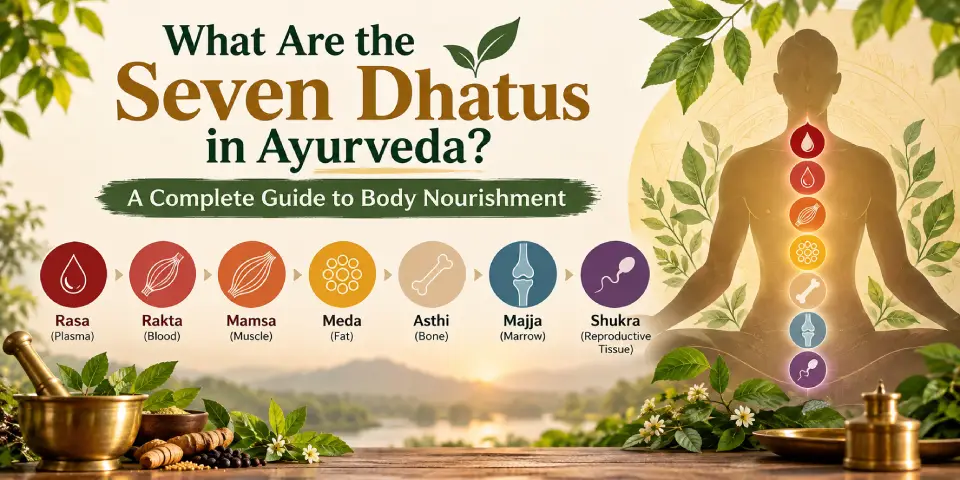
According to Ayurveda, good health depends on proper digestion, balanced bodily functions, and adequate nourishment of the body’s tissues. One of the fundamental concepts explaining how the body receives and utilizes nourishment is the Sapta Dhatu, or the seven Dhatus in Ayurveda.
These seven Dhatus are traditionally described as the body’s supporting and nourishing tissues. Each Dhatu performs specific functions and contributes to overall physical well-being.
At Kalpataru Ayurvediya Chikitsalaya™, backed by over 26+ years of clinical excellence, Dr. Manoj Deshpande and Dr. Aparna Deshpande—widely recognized as among the best ayurvedic doctor in pune—emphasize that understanding the Seven Dhatus in Ayurveda is essential for exploring traditional perspectives on tissue nourishment, systemic strength, deep vitality, and long-term restorative health.
What Are Dhatus in Ayurveda?
The word Dhatu comes from the Sanskrit root “Dha,” meaning “to support” or “to sustain.”
In Ayurvedic philosophy, Dhatus are the fundamental tissues that support the body’s structure, growth, maintenance, and functioning.
Ayurveda identifies seven primary Dhatus, collectively known as Sapta Dhatu:
- Rasa Dhatu – Nourishing Fluid
- Rakta Dhatu – Blood Tissue
- Mamsa Dhatu – Muscle Tissue
- Meda Dhatu – Fat Tissue
- Asthi Dhatu – Bone Tissue
- Majja Dhatu – Marrow and Nervous Tissue
- Shukra Dhatu – Reproductive Tissue
According to classical Ayurvedic teachings, these Dhatus are nourished through a sequential process that begins with properly digested food.
1. Rasa Dhatu – The Foundation of Nourishment:
Rasa Dhatu is considered the first Dhatu formed after digestion. It represents the nourishing fluid that circulates throughout the body.
Functions of Rasa Dhatu:
- Provides nourishment to other tissues.
- Supports hydration and tissue maintenance.
- Contributes to overall vitality.
In Ayurvedic theory, healthy Rasa Dhatu is associated with adequate nourishment and well-being.
2. Rakta Dhatu – Supporting Life and Vitality:
Dhatu is traditionally associated with blood and its life-supporting functions.
Functions of Rakta Dhatu:
- Supports vitality and tissue nourishment.
- Contributes to a healthy complexion.
- Helps sustain normal bodily functioning.
Ayurveda considers balanced Rakta Dhatu important for maintaining physical health.
3. Mamsa Dhatu – Muscle Strength and Structure:
Mamsa Dhatu represents the muscular tissues that provide shape, stability, and support to the body.
Functions of Mamsa Dhatu:
- Supports muscular strength.
- Helps maintain body structure.
- Contributes to physical movement and stability.
Traditional Ayurveda associates well-nourished Mamsa Dhatu with strength and physical endurance.
4. Meda Dhatu – Energy Storage and Lubrication:
Meda Dhatu is associated with adipose or fatty tissue.
Functions of Meda Dhatu:
- Provides energy reserves.
- Supports cushioning and protection.
- Contributes to lubrication and bodily comfort.
Ayurveda emphasizes maintaining an appropriate balance of Meda Dhatu rather than excessive accumulation or depletion.
5. Asthi Dhatu – Supporting Bones and Body Framework:
Asthi Dhatu represents bones and the structural framework of the body.
Functions of Asthi Dhatu:
- Provides structural support.
- Helps maintain posture and stability.
- Protects important internal organs.
In Ayurvedic philosophy, adequate nourishment of Asthi Dhatu is considered essential for maintaining skeletal strength.
6. Majja Dhatu – Nourishment of Marrow and Nervous Tissue:
Majja Dhatu is traditionally associated with bone marrow and structures related to the nervous system.
Functions of Majja Dhatu:
- Supports the internal nourishment of bones.
- Contributes to strength and vitality.
- Is traditionally associated with nervous system well-being.
These descriptions reflect Ayurvedic concepts and should not be considered equivalent to modern anatomical or neurological classifications.
7. Shukra Dhatu – Reproductive Health and Vitality:
Shukra Dhatu is the seventh Dhatu and is associated with reproductive tissue and reproductive potential.
Functions of Shukra Dhatu:
- Supports reproductive functions.
- Is associated with fertility and vitality.
- Represents the culmination of tissue nourishment in classical Ayurvedic theory.
Shukra Dhatu is discussed in relation to reproductive health in both men and women within traditional Ayurvedic teachings.
How Are the Seven Dhatus Nourished?
According to Ayurveda, the process of Dhatu nourishment begins with Agni, the digestive and metabolic principle.
When food is properly digested, its nourishing essence is believed to support the formation and maintenance of bodily tissues.
The traditional sequence of Dhatu nourishment is:
Rasa → Rakta → Mamsa → Meda → Asthi → Majja → Shukra
Each Dhatu is described as receiving nourishment and contributing to the nourishment of the next.
This is a classical Ayurvedic model, not a scientifically established description of how human tissues develop or receive nutrients.
How to Support Healthy Dhatus According to Ayurveda?
Ayurveda recommends a balanced lifestyle to support overall tissue nourishment.
- Eat a balanced diet: Include a variety of nutritious foods suited to individual needs.
- Maintain regular meal timings: Consistent eating habits can support digestive comfort.
- Support digestive health: Avoid habitual overeating and pay attention to digestive symptoms.
- Stay physically active: Regular exercise supports muscles, bones, and general well-being.
- Get adequate sleep: Rest is important for normal bodily recovery and maintenance.
- Manage stress: Yoga, meditation, and relaxation practices may support overall wellness.
Ayurvedic herbs, formulations, or specialized therapies should be used only after appropriate professional assessment.
Conclusion:
The seven Dhatus in Ayurveda—Rasa, Rakta, Mamsa, Meda, Asthi, Majja, and Shukra— form an important part of Ayurveda’s traditional understanding of body nourishment.
The concept of Sapta Dhatu emphasizes the interconnected nature of digestion, nutrition, tissue maintenance, and overall well-being.
At Kalpataru Ayurvediya Chikitsalaya™, understanding foundational Ayurvedic principles can help patients make informed decisions about holistic wellness. Individualized Ayurvedic guidance should complement, rather than replace, necessary evidence-based medical care.
Restore Deep Tissue Nourishment & Vitality
If you suffer from chronic fatigue, tissue depletion, bone and joint weakness, or low immunity, personalized Dhatu-nourishing (Dhatu Poshana) therapies can help rebuild your core health. Visit Kalpataru Ayurvediya Chikitsalaya™—recognized as the best ayurvedic clinic in pune—for a comprehensive health assessment and tailored treatment plan.
Consult with Dr. Manoj Deshpande and Dr. Aparna Deshpande, backed by over 26+ years of clinical excellence and trusted as the best ayurvedic doctor in pune for holistic healing and constitutional restoration.
👉 Book an Appointment with Dr. Manoj Deshpande or call +91 9422068682 / +91 9423591682 to schedule your clinic visit to Kalpataru Ayurvediya Chikitsalaya™ today.
Frequently Asked Questions (FAQ's):
The seven Dhatus are Rasa, Rakta, Mamsa, Meda, Asthi, Majja, and Shukra. They represent seven fundamental tissue categories in traditional Ayurvedic philosophy.
Rasa Dhatu is considered the first Dhatu and is associated with the initial distribution of nourishment following digestion.
In Ayurveda, Agni represents digestive and metabolic processes believed to support the transformation of food into nourishment for the Dhatus.
Ayurveda recommends nutritious food, regular physical activity, adequate sleep, stress management, and individualized lifestyle guidance.
The Sapta Dhatu framework is a traditional Ayurvedic model. Although some Dhatus have parallels with modern tissue categories, the complete framework and its sequential nourishment theory have not been scientifically established.