An itchy, flaky scalp is a common problem. In many cases, people assume that white flakes mean dandruff and start changing shampoos or applying different oils. However, persistent scaling, redness, thick patches, itching, or bleeding may indicate a different condition such as scalp psoriasis. Understanding the key differences in Scalp Psoriasis vs Dandruff is critical to choosing the correct, long-term line of management.
Although dandruff and scalp psoriasis may appear similar, they are fundamentally different conditions in terms of their root causes, severity, recurrence patterns, and holistic care strategies. From an Ayurvedic perspective, proper diagnosis is essential before starting any internal or external treatment.
At Kalpataru Ayurvediya Chikitsalaya™, backed by over 26+ years of clinical excellence, Dr. Manoj Deshpande and Dr. Aparna Deshpande—widely recognized as among the best ayurvedic doctor in pune—take a root-cause approach to chronic scalp disorders. If you are seeking effective, personalized scalp psoriasis treatment in pune, our clinic evaluates your scalp condition along with specific Dosha imbalances (such as Vata, Kapha, and Rakta), digestive strength (Agni), dietary habits, lifestyle factors, and stress levels to build a tailored, long-lasting Ayurvedic management plan.
What Is Dandruff?
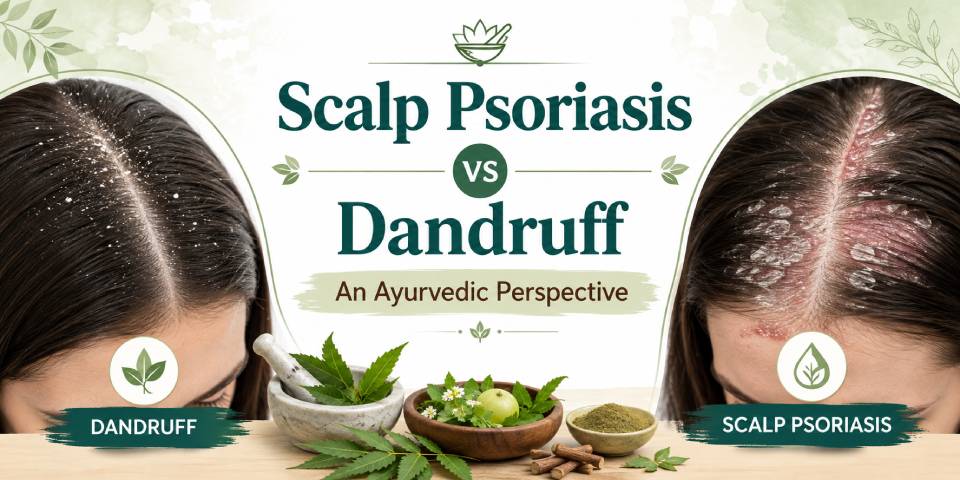
Dandruff is a common scalp condition that causes excessive shedding of dead skin cells. It may produce:
- Fine white or yellowish flakes
- Mild to moderate itching
- Dryness or oiliness of the scalp
- Flakes on the hair and shoulders
- Occasional irritation
Dandruff is not necessarily caused by poor hygiene. Factors such as excess scalp oil, dryness, sensitivity, microorganisms such as Malassezia, stress, weather changes, and unsuitable hair-care products may contribute to the problem.
Mild dandruff usually does not cause thick, clearly defined plaques.
Dandruff According to Ayurveda:
Dandruff is commonly correlated in Ayurveda with a condition known as Darunaka.
Darunaka is traditionally associated mainly with Vata and Kapha Dosha. Common features may include:
- Kandu – itching
- Rukshata – dryness
- Twak Sphutana – flaking or cracking
- Scalp roughness
- In some cases, increased hair fall
When Vata is predominant, the scalp may become dry, rough, and excessively flaky. When Kapha is involved, flakes may become sticky or oily and itching may persist.
Ayurvedic treatment therefore does not use the same approach for every person with dandruff.
What Is Scalp Psoriasis?
Scalp psoriasis is a chronic inflammatory skin condition associated with abnormal immune activity and rapid skin-cell turnover.
It may affect a small part of the scalp or spread across a larger area. In some people, the plaques may extend:
- Beyond the hairline
- Behind the ears
- Onto the forehead
- Toward the back of the neck
Typical signs include:
- Thick scalp patches
- Silvery-white scaling
- Red or inflamed skin
- Severe itching
- Dryness and cracking
- Burning or soreness
- Bleeding after scratching
- Temporary hair shedding in some cases
- Psoriasis is not contagious.
Scalp Psoriasis From an Ayurvedic Perspective:
Modern scalp psoriasis does not have one exact equivalent in classical Ayurvedic texts. However, psoriasis-like presentations are often studied and managed under the broader Ayurvedic category of Twak Roga.
Depending on the symptoms, it is frequently correlated with conditions such as Ekakushtha or Kitibha Kushtha.
Ayurveda may assess:
- Dosha involvement
- Prakriti or body constitution
- Digestive strength or Agni
- Diet
- Bowel habits
- Sleep
- Stress levels
- Disease duration
- Seasonal aggravation
- Previous treatments
- Frequency of recurrence
This individualized evaluation is important because scalp psoriasis is usually a chronic condition rather than simply a surface-level flaking problem.
Scalp Psoriasis Vs. Dandruff: Main Differences
One of the biggest warning signs is the presence of thick, persistent, clearly defined patches rather than simple loose flakes.
Can Dandruff Turn Into Psoriasis?
No. Dandruff does not normally “turn into” psoriasis.
They are different conditions.
However, psoriasis can sometimes be mistaken for severe dandruff. A person may therefore continue using anti-dandruff products for months without significant improvement.
Other conditions such as seborrheic dermatitis, fungal infection, eczema, or allergic contact dermatitis can also cause scaling. This is why persistent scalp problems require proper evaluation.
Why Does Scalp Psoriasis Keep Coming Back?
Psoriasis commonly has periods of improvement followed by flare-ups.
Possible triggers may include:
- Mental stress
- Lack of sleep
- Cold and dry weather
- Skin injury
- Infection
- Smoking
- Alcohol
- Certain medicines
- Individual dietary and lifestyle factors
In Ayurveda, identifying such contributing factors is known as Nidana Parivarjana, or avoiding factors that may aggravate the condition.
Instead of treating only the visible scales, an Ayurvedic physician may also examine digestion, routine, sleep, bowel health, stress, and other individual triggers.
Ayurvedic Treatment Approach for Dandruff:
Ayurvedic treatment for dandruff depends on whether the scalp is:
- Dry
- Oily
- Itchy
- Inflamed
- Sensitive
- Associated with hair fall
Management may include selected herbal scalp applications, appropriate cleansing, dietary corrections, lifestyle changes, and internal Ayurvedic medicines when required.
Is Oiling Always Good for Dandruff?
No.
This is an important misconception.
Oil may help when the scalp is genuinely dry and Vata-dominant. However, frequent heavy oiling may not suit an oily, sticky, or inflamed scalp.
Therefore, the choice of oil, duration of application, and frequency should depend on the condition of the scalp.
Ayurvedic Management of Scalp Psoriasis:
Scalp psoriasis generally requires more comprehensive management than ordinary dandruff.
Depending on the patient, an Ayurvedic treatment plan may include:
- Nidana Parivarjana – identifying and avoiding aggravating factors
- Shamana Chikitsa – Dosha-pacifying treatment
- Suitable internal Ayurvedic medicines
- Medicated external scalp applications
- Diet and lifestyle modification
- Stress management
- Selected Panchakarma procedures where clinically appropriate
Procedures such as Virechana, Vamana, or other Panchakarma therapies are not necessary for every patient. They should only be considered after proper examination by a qualified Ayurvedic physician.
They should never be attempted at home.
Diet and Lifestyle From an Ayurvedic Perspective:
Ayurveda considers Ahara and Vihara—diet and lifestyle—important in the management of chronic skin disorders.
General supportive habits may include:
- Eating freshly prepared meals
- Maintaining regular meal timings
- Avoiding frequent overeating
- Maintaining proper digestion
- Getting adequate sleep
- Managing stress
- Avoiding smoking
- Limiting excessive alcohol
- Avoiding personal food triggers when identified
There is no single diet that cures psoriasis for everyone. Dietary advice should ideally be individualized rather than based on restrictive internet diets.
Stress and Scalp Psoriasis:
Stress is a commonly reported trigger for psoriasis flare-ups.
At the same time, visible scalp scaling, itching, and hair shedding may increase emotional stress, creating a cycle.
Ayurvedic supportive care may therefore include:
- Regular sleep
- Yoga
- Pranayama
- Meditation
- Appropriate physical activity
- Maintaining a consistent daily routine
These measures may support overall management but should not replace necessary medical treatment.
Can Scalp Psoriasis Cause Hair Loss?
Yes, temporary hair fall may occur.
Possible reasons include:
- Severe inflammation
- Repeated scratching
- Forceful removal of scales
- Harsh scalp treatments
- Breakage of hair
Hair often improves once inflammation is controlled. However, significant or persistent hair loss should be professionally evaluated.
When Should You Consult a Doctor?
Seek professional assessment when you notice:
- Thick or persistent scalp plaques
- Severe itching
- Bleeding
- Significant redness
- Scaling beyond the hairline
- Frequent recurrence
- Hair loss
- Nail changes
- Similar patches on elbows, knees, or other areas
- No improvement despite regular dandruff treatment
Correct diagnosis is essential because not every flaky scalp is dandruff.
Ayurvedic Scalp Care at Kalpataru Ayurvediya Chikitsalaya™:
At Kalpataru Ayurvediya Chikitsalaya™, scalp conditions such as persistent dandruff and psoriasis-like scalp complaints can be evaluated from an Ayurvedic perspective.
The treatment approach may consider:
- Nature and severity of scalp lesions
- Dosha involvement
- Prakriti
- Digestion and bowel habits
- Diet
- Lifestyle
- Stress
- Sleep
- Recurrence pattern
- Seasonal aggravation
Based on the individual assessment, suitable Ayurvedic medicines, external applications, dietary guidance, lifestyle recommendations, and Panchakarma therapies may be considered where appropriate.
The aim is not merely to remove visible flakes temporarily, but to understand the factors contributing to repeated scalp symptoms and support long-term management.
Frequently Asked Questions (FAQ's):
No. Dandruff usually causes loose flakes, while scalp psoriasis commonly causes thicker, more clearly defined inflammatory plaques.
Dandruff is commonly correlated with Darunaka, often associated with Vata-Kapha imbalance.
Psoriasis-like conditions are generally evaluated under Kushtha Roga and may be correlated with Ekakushtha or Kitibha depending on the presentation.
Psoriasis is a chronic condition and a permanent cure in every patient cannot be guaranteed. Ayurvedic management may focus on controlling symptoms, reducing aggravating factors, and supporting longer periods of improvement.
Not necessarily. The suitability of oil depends on the scalp condition, inflammation, Dosha involvement, and individual assessment.
No. Psoriasis does not spread from one person to another through touch.
Conclusion:
Dandruff and scalp psoriasis may both cause itching and flakes, but they require different treatment strategies.
Dandruff is generally a more superficial scalp disorder and is commonly correlated with Darunaka in Ayurveda. Scalp psoriasis is a chronic inflammatory condition and may be evaluated under the broader Ayurvedic concept of Kushtha, particularly psoriasis-like presentations such as Ekakushtha.
If your scalp problem keeps returning, produces thick patches, extends beyond the hairline, causes bleeding, severe itching, or hair loss, avoid relying only on anti-dandruff products.
A detailed consultation at Kalpataru Ayurvediya Chikitsalaya™ can help identify the nature of the scalp problem and guide an individualized Ayurvedic treatment plan based on your symptoms, Dosha condition, diet, lifestyle, and overall health.
Take Control of Your Scalp Health Today
Don’t let chronic scalp scaling or itching affect your everyday confidence. Visit Kalpataru Ayurvediya Chikitsalaya™ in Pune to get an accurate root-cause diagnosis and a personalized holistic care plan.
Consult with renowned specialist Dr. Manoj Deshpande—backed by over 26+ years of clinical experience in treating complex skin and scalp disorders naturally.
Book an Appointment with Dr. Manoj Deshpande or call +91 9422068682 / +91 9423591682.
Disclaimer: This blog is for educational purposes only. It should not be used as a substitute for diagnosis or treatment from a qualified healthcare professional. Ayurvedic medicines and Panchakarma procedures should be undertaken only under professional supervision.