
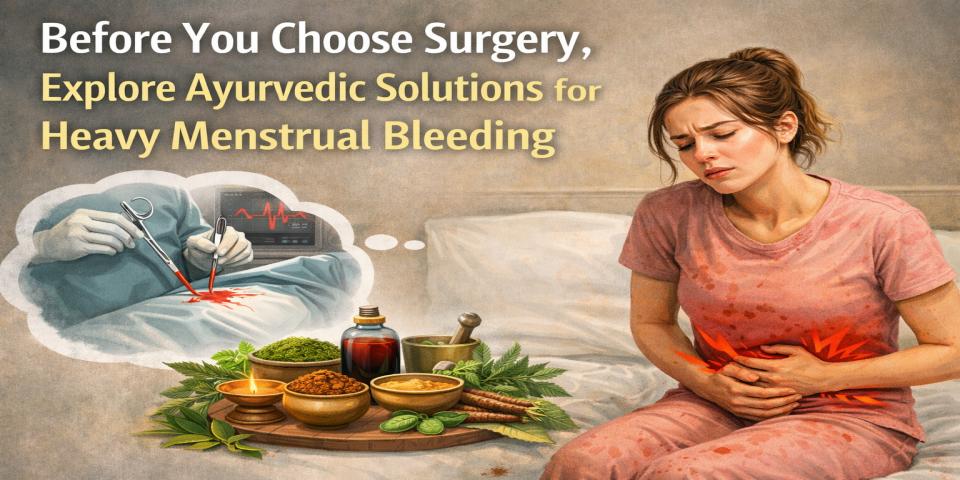
Heavy menstrual bleeding (HMB), medically known as menorrhagia, is one of the most common gynecological concerns affecting women of reproductive and perimenopausal age. Many women are advised surgical options like hysterectomy when symptoms become severe—but surgery is not always the first or only solution.
Before making a life-altering decision, it’s important to understand that that through Kalpataru Ayurvediya Chikitsalaya™, you can access safe, holistic, and often effective alternatives that address the root cause rather than just suppress symptoms.
What is Heavy Menstrual Bleeding?
Heavy menstrual bleeding refers to:
- Bleeding lasting more than 7 days
- Frequent pad/tampon changes (several times a day)
- Passage of large clots
- Symptoms like fatigue, dizziness, or anemia
Globally, this condition affects a significant number of women and can severely impact physical, emotional, and social well-being.
Why Are Women Advised Surgery?
In modern medicine, treatment options include:
- Hormonal therapy
- Painkillers and antifibrinolytics
- Intrauterine devices (IUDs)
- Surgical procedures like endometrial ablation or hysterectomy
While these can be effective, they come with:
- Side effects
- Hormonal imbalance
- Irreversible loss of fertility (in hysterectomy)
- Surgical procedures and anaesthesia itself carry many undesired effects such as bleeding, infection, etc.
This is where Ayurveda provides a valuable alternative.
Ayurvedic Perspective: Understanding the Root Cause
In Ayurveda, heavy bleeding is referred to as Raktapradara or Asrigdara.
It is primarily caused by:
- Pitta Dosha aggravation (heat imbalance)
- Vitiation of Rakta Dhatu and Vayu mahabhut
- Weak uterine tone
- Poor digestion (Agni imbalance)
Ayurveda doesn’t just stop the bleeding—it works on:
- Balancing hormones naturally
- Strengthening the uterus
- Correcting digestion and metabolism
- Rebuilding overall health
Additional Ayurvedic Insight:
In Ayurveda, a condition called Raktapitta is described, where there is an abnormal increase of the Teja Mahabhuta and aggravation of Pitta Dosha. Proper management of Raktapitta—especially Adhoga Raktapitta (downward bleeding disorders)—can provide significant relief in conditions like dysmenorrhea and excessive menstrual bleeding (Atyartava).
How Ayurveda Treats Heavy Menstrual Bleeding?
1. Herbal Medicines (Shamana Therapy):
Ayurvedic herbs help control bleeding and balance hormones:
- Lodhra (Symplocos racemosa) – Reduces excessive bleeding
- Ashoka (Saraca indica) – Tones the uterus
- Nagkesar – Natural hemostatic
- Shatavari – Hormonal balance and nourishment
- Swarna Gairika – Traditionally used for its hemostatic (bleeding control) properties
- Jamun Bark (Syzygium cumini) – Helps in reducing excessive bleeding
- Bhumyamalaki (Phyllanthus niruri) – Supports liver function and Pitta balance
- Yashtimadhu (Licorice) – Soothing, anti-inflammatory, and supports hormonal balance
- Mocharas – Known for its astringent and bleeding-control properties
- Sarjarasa – Helps in wound healing and controlling abnormal discharge
Scientific reviews suggest that herbal and Ayurvedic formulations help reduce menstrual blood loss.
2. Panchakarma (Detoxification Therapies):
In selected cases, Ayurvedic cleansing therapies are recommended:
- Virechana (purgation therapy) – Reduces excess Pitta
- Basti (medicated enema) – Balances Vata and pelvic health
3. Dietary Modifications (Ahara):
Diet plays a major role in controlling bleeding.
Recommended:
- Cooling foods (coconut, pomegranate, ghee)
- Iron-rich foods (dates, ragi, leafy greens)
Avoid:
- Spicy, sour, and fried foods
- Excess caffeine
- Processed foods
4. Lifestyle Corrections (Vihara):
- Stress management (Yoga & Meditation)
- Adequate sleep
- Avoid excessive physical exertion during periods
5. Rebuilding Strength (Rasayana Therapy):
After controlling bleeding, Ayurveda focuses on:
- Correcting anemia
- Improving energy levels
- Restoring menstrual regularity
Clinical Experience at Kalpataru Ayurvediya Chikitsalaya™:
At Kalpataru Ayurvediya Chikitsalaya™, the Best ayurvedic clinic in Pune, hundreds of women have successfully avoided hysterectomy (uterus removal surgery) through Ayurvedic treatment. Patients who had continuous bleeding for days, weeks, or even months—leading to severe fatigue, hemoglobin levels dropping as low as 5, dizziness, weakness, and complete loss of appetite—have shown remarkable improvement. Even in extreme cases where women were unable to step out of their homes due to heavy bleeding, Ayurvedic treatment has helped control symptoms, restore strength, and enable them to return to a normal, healthy life.
When Ayurveda Can Help You Avoid Surgery?
Ayurvedic treatment can be highly beneficial in:
- Hormonal imbalance-related bleeding
- PCOS-related irregular heavy periods
- Early fibroids (non-surgical stage)
- Perimenopausal heavy bleeding
Many women experience:
- Reduced bleeding within 1–2 cycles
- Improved energy and hemoglobin
- Regular menstrual cycles
When Surgery May Still Be Needed?
It’s important to be realistic.
Surgery may be necessary in:
- Large fibroids
- Severe endometriosis
- Cancer or precancerous conditions
- Life-threatening bleeding
Why You Should Consider Ayurveda First?
✔ Non-invasive treatment
✔ Treats root cause, not just symptoms
✔ Preserves uterus and fertility
✔ Improves overall health, not just periods
Important Note: Don't Self-Medicate
Even though Ayurvedic herbs are natural, they must be:
- Prescribed based on your Prakriti (body type)
- Tailored to your specific condition
Always consult a best Ayurvedic doctor before starting treatment.
Final Thoughts:
Heavy menstrual bleeding can be distressing—but surgery is not always the only answer.
Ayurveda offers a time-tested, holistic path that focuses on:
- Healing the body
- Balancing hormones naturally
- Restoring menstrual health
Before opting for surgery, give your body a chance to heal naturally.
If you or someone you know is suffering from heavy periods, visit Kalpataru Ayurvediya Chikitsalaya™ and explore safe, personalized treatment options.