
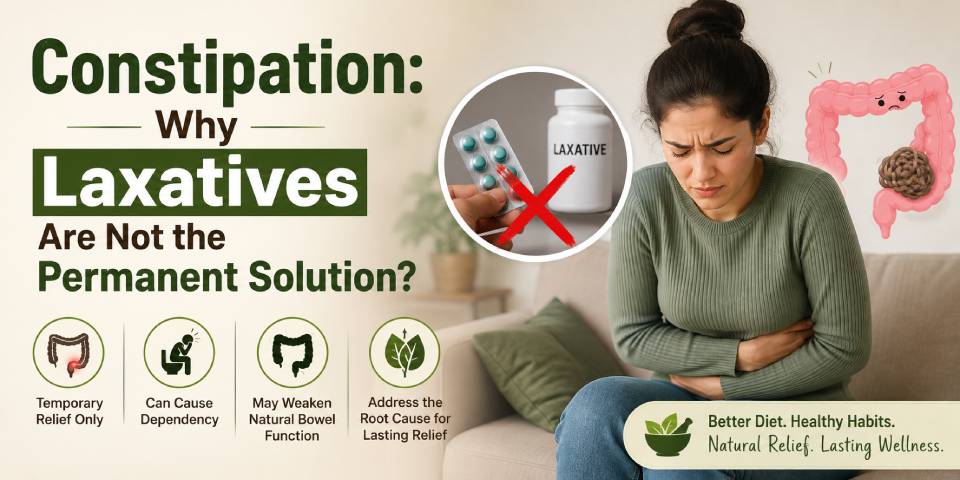
Constipation is one of the most common digestive complaints. For many people, the immediate response is to reach for a quick fix whenever bowel movements become difficult or infrequent. However, understanding why Laxatives Are Not the Permanent Solution is essential for achieving long-term digestive relief. While laxatives may offer temporary comfort, relying on them continuously fails to address why constipation is happening in the first place.
At Kalpataru Ayurvediya Chikitsalaya™, backed by over 25 years of clinical expertise, Dr. Manoj Deshpande and Dr. Aparna Deshpande—widely recognized as among the best ayurvedic doctor in pune—emphasize that true healing comes from treating the root cause.
From an Ayurveda perspective, healthy digestion is not simply about passing stool every day. It is about maintaining balanced Agni (digestive fire), proper movement of Vata, adequate nourishment and hydration, and a suitable daily routine.
This is why Ayurveda approaches constipation by looking beyond the immediate symptom and focusing on the underlying imbalance.
What Is Constipation?
Constipation generally refers to difficulty passing stools, hard or dry stools, excessive straining, a feeling of incomplete evacuation, or bowel movements that are less frequent than usual.
However, bowel habits naturally vary from person to person. A healthy bowel pattern is not necessarily the same for everyone.
Occasional constipation can occur because of:
- Low dietary fibre
- Inadequate fluid intake
- Lack of physical activity
- Changes in routine or travel
- Ignoring the urge to pass stool
- Certain medications
- Stress and poor sleep
- Changes in diet
When constipation becomes recurrent, it is important to understand the underlying cause rather than repeatedly suppressing the symptom.
Why Do Laxatives Seem to Work?
Laxatives are designed to help stool pass more easily. Depending on the type, they may increase water in the stool, soften it, increase intestinal movement, or stimulate bowel contractions.
This can be useful in certain situations and under appropriate medical guidance.
The problem arises when a person begins to think:
“Whenever I am constipated, I will simply take a laxative.”
This approach may provide short-term relief without addressing contributing factors such as diet, hydration, physical activity, bowel habits, digestion, or other underlying causes.
Some types of laxatives, particularly stimulant laxatives, are not intended to become a long-term self-treatment without medical supervision.
Ayurveda's Perspective on Constipation:
Ayurveda commonly relates constipation to an aggravation or disturbance of Vata Dosha, particularly the function associated with the downward movement of bodily waste.
Vata is characterised by qualities such as dryness, lightness and mobility. When these qualities become excessive, the colon may become dry and bowel movements may become difficult.
Ayurveda therefore does not look at constipation merely as “stool that is not coming out.”
Instead, it asks:
Why has normal bowel movement become disturbed?
Factors such as irregular meals, excessive dry foods, inadequate hydration, excessive travel, lack of routine, stress, suppression of natural urges and irregular sleep may contribute to Vata imbalance.
The Role of Agni in Constipation:
Agni, or digestive fire, is central to Ayurvedic understanding of digestion.
When digestion is not functioning properly, a person may experience symptoms such as:
- Bloating
- Gas
- Heaviness after meals
- Poor appetite
- Irregular bowel movements
- Undigested or poorly formed stools
Therefore, an Ayurvedic approach may focus not only on facilitating bowel movement but also on supporting healthy digestion.
The goal is not simply:
“Empty the bowel.”
The goal is:
“Restore healthy digestion and natural elimination.”
Why "Quick Relief" Is Not Always a Complete Solution?
Imagine someone has a dry, irregular diet, drinks very little water, rarely exercises, ignores the urge to pass stool and sleeps at inconsistent times.
Taking a laxative may help them pass stool today.
But if the same lifestyle continues, constipation may return tomorrow or next week.
This illustrates an important principle:
Relieving a symptom is not always the same as correcting its cause.
Ayurveda traditionally emphasises identifying and correcting the factors contributing to the imbalance.
An Ayurvedic Approach to Constipation:
The exact approach should depend on the individual, their constitution, symptoms, diet, lifestyle and other health factors. Ayurveda is therefore not a “one remedy fits everyone” system.
1. Support a Regular Routine:
A consistent daily routine can help establish regular bowel habits.
Try to maintain relatively consistent timings for:
- Waking up
- Meals
- Sleeping
- Physical activity
- Bowel evacuation
The body often responds well to regularity.
2. Pay Attention to Hydration:
Insufficient fluid intake can contribute to harder stools.
Adequate hydration should be maintained throughout the day, with individual needs varying according to climate, activity level, diet and health status.
3. Choose Appropriate Fibre:
Fibre-rich foods can support healthy bowel movements.
Depending on individual tolerance, the diet may include:
- Vegetables
- Fruits
- Whole grains
- Legumes
- Appropriate sources of natural fibre
However, suddenly increasing fibre while drinking very little fluid may worsen bloating or discomfort in some people.
4. Include Healthy Fats When Appropriate:
Ayurveda places importance on countering excessive dryness when Vata is aggravated.
Appropriate amounts of healthy dietary fats, depending on an individual’s nutritional needs, may be part of a balanced diet.
This does not mean consuming excessive amounts of oil or fat. The quantity and type should be appropriate for the individual.
5. Stay Physically Active:
Regular movement supports overall digestive and bowel health.
Simple activities such as walking, stretching and appropriate exercise can be beneficial, particularly for people who spend long hours sitting.
6. Do Not Ignore the Natural Urge:
Repeatedly suppressing the urge to pass stool may contribute to irregular bowel habits.
Whenever possible, allow adequate time and privacy for natural bowel evacuation instead of routinely postponing it.
7. Manage Stress and Sleep:
Digestion is influenced by the overall interaction between the mind, nervous system and digestive system.
Chronic stress, poor sleep and irregular routines can affect appetite, digestion and bowel habits.
Therefore, an Ayurvedic lifestyle approach may also include:
- Adequate sleep
- Stress management
- Relaxation practices
- Yoga
- Appropriate breathing practices
- Mindful eating
Constipation in Children:
Constipation in young children should also not be managed by repeatedly giving medicines or laxatives. In particular, children who consume excessive amounts of milk may be more prone to constipation.
Similarly, children who frequently consume bakery products, biscuits and bread may also experience constipation.
Classical laxatives should generally not become a regular habit in children. Wherever appropriate, an attempt can be made to support bowel regularity through dietary measures.
For example, dried dates (kharik) powder may be given with warm milk and a small amount of ghee. This may help support bowel movement, improve intestinal capacity and promote better peristalsis.
Similarly, black raisins soaked overnight and consumed in the morning can also be a useful dietary approach for supporting bowel regularity in children.
Any dietary or Ayurvedic intervention for a child should be appropriate for the child’s age, individual needs and overall health, and should be taken under appropriate professional guidance when required.
Chinchā-Lavana Taila in Chronic Constipation:
In the Panchabhautika Chikitsa approach, an oil prepared using tamarind (chinchā), Saindhava salt and peanut oil is known as Chinchā-Lavana Taila.
This oil is traditionally used for people experiencing chronic constipation, hard stools or “stool stones,” and difficulty or excessive straining during bowel movements.
There is a specific method of administering this preparation. It is traditionally given mixed with the first bite of the meal, after which the person continues with the remaining meal.
From the Ayurvedic perspective, this approach is intended to support the proper movement of Apana Vayu. When Apana Vayu becomes disturbed or moves in the opposite direction, the aim is to restore its downward movement and support natural elimination.
This may help hard, pellet-like stools pass more easily and may gradually reduce the need for excessive straining during bowel movements.
The specific preparation, dosage and method of administration should be determined by a qualified Ayurvedic physician rather than through self-medication.
Chinchā-Lavana Taila as Matra Basti:
The same oil may also be administered as Matra Basti in appropriate cases.
From the Ayurvedic perspective, Matra Basti with this oil is intended to help reduce dryness in the intestines and provide lubrication. This may support easier bowel movement and provide relief from constipation.
The suitability of Matra Basti, including the type and quantity of oil and the method of administration, should be determined and performed according to appropriate Ayurvedic guidance.
What About Ayurvedic Herbs and Formulations?
Ayurveda includes several herbs and traditional formulations that have historically been used to support bowel regularity.
However, “natural” does not automatically mean “safe for everyone.”
The appropriate herb or formulation depends on factors such as:
- Age
- Constitution
- Digestive strength
- Severity and duration of constipation
- Other symptoms
- Pregnancy status
- Existing health conditions
- Other medicines being taken
Self-medicating with herbal laxatives for long periods is therefore not advisable.
A qualified Ayurvedic physician can determine whether the problem is primarily related to dietary habits, Vata imbalance, digestion, lifestyle or another underlying issue and select an appropriate approach.
Constipation Should Not Always Be Treated as a Simple Digestive Problem
Persistent constipation can sometimes be associated with conditions that require medical evaluation.
Seek medical advice if constipation is:
- Persistent or recurrent
- Suddenly much worse than usual
- Associated with blood in the stool
- Associated with unexplained weight loss
- Accompanied by persistent vomiting
- Associated with significant or severe abdominal pain
- Accompanied by marked abdominal swelling
- Associated with unexplained anaemia or significant weakness
People taking medicines that can cause constipation should also discuss the problem with their healthcare professional rather than simply adding a laxative.
The Ayurvedic Goal: Natural Bowel Regularity:
The objective of Ayurveda is not necessarily to make a person dependent on a substance every morning to pass stool.
Instead, the broader goal is to support the body’s natural digestive and elimination processes.
That may involve addressing:
Diet → Digestion → Hydration → Routine → Activity → Stress → Vata balance
When these factors are appropriately addressed, bowel movements may become more regular and comfortable.
Laxatives: Useful Tool, Not Always a Permanent Strategy
Laxatives can have an appropriate role in constipation management when used correctly and for the right indication.
The concern is long-term self-treatment without understanding the underlying problem.
If constipation keeps returning, repeatedly taking something to force bowel movement may only keep addressing the final symptom.
A better question is:
“Why is my bowel movement becoming irregular in the first place?”
That shift—from immediate relief to understanding the underlying cause—is an important part of the Ayurvedic perspective.
Final Thoughts:
Constipation is not simply a problem of “not emptying the bowel.” It can be influenced by food, hydration, digestion, lifestyle, stress, routine and individual factors.
Ayurveda traditionally views constipation through the lens of Vata, Agni and the body’s natural elimination process.
Rather than depending indefinitely on quick-relief solutions, the focus can be on building healthy habits, supporting digestion and identifying the factors contributing to recurring constipation.
Don’t just empty. Understand why.
If constipation is persistent, severe or accompanied by warning signs, Visit Kalpataru Ayurvediya Chikitsalaya™
Take the First Step Toward Permanent Relief
Are you ready to address the root cause of your digestive issues naturally? Consult with expert Ayurvedic doctors Dr. Manoj Deshpande and Dr. Aparna Deshpande at Kalpataru Ayurvediya Chikitsalaya™ to receive a personalized, holistic treatment plan tailored to your body’s unique needs.
👉 Book an Appointment Today or call +91 9422068682 to start your journey toward long-term digestive wellness.