
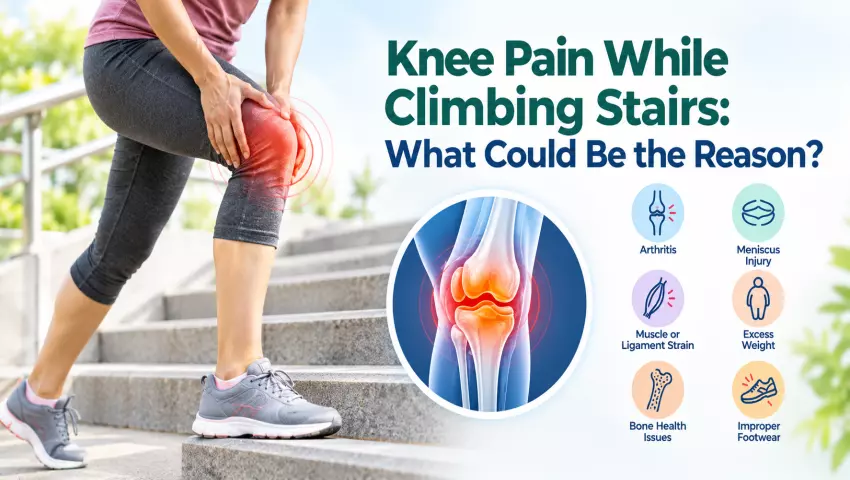
Knee pain while climbing stairs is a common problem that affects people of different age groups. Whether you experience a sharp pain, mild discomfort, stiffness, or a clicking sensation, climbing stairs can become challenging when your knee joints are not functioning comfortably.
Many people ignore knee pain initially, assuming it is caused by tiredness or aging. However, recurring pain while climbing or descending stairs may indicate an underlying joint problem that requires attention.
At Kalpataru Ayurvediya Chikitsalaya®, Kothrud, Pune, we emphasize understanding the possible causes of knee pain and evaluating joint health through an individualized Ayurvedic approach.
Why Does Your Knee Hurt While Climbing Stairs?
The knee is one of the body’s major weight-bearing joints. It connects the thigh bone (femur), shin bone (tibia), and kneecap (patella). Muscles, ligaments, cartilage, and tendons work together to support smooth movement.
When you climb stairs, your knees bend while supporting and lifting your body weight. This increases the demand on the muscles and the pressure within the knee joint, particularly around the kneecap.
If there is irritation, inflammation, cartilage damage, or muscle weakness, this movement may trigger pain.
7 Common Causes of Knee Pain While Climbing Stairs:
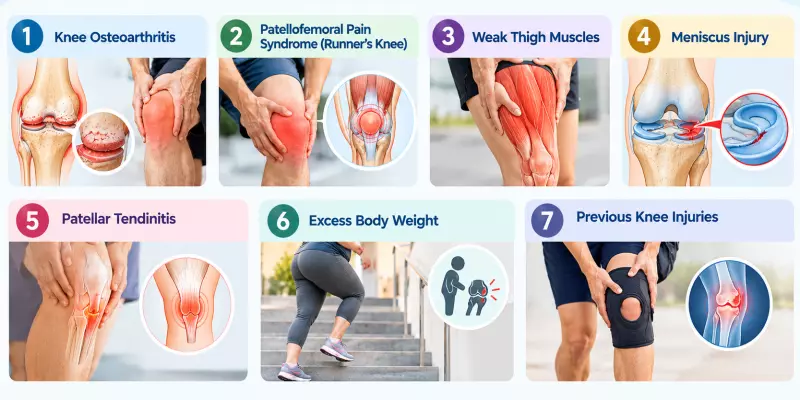
1. Knee Osteoarthritis:
Osteoarthritis is a common cause of knee pain, especially among middle-aged and older adults.
It occurs when the cartilage within the knee joint gradually deteriorates, leading to changes in the joint structure.
Common symptoms include:
- Pain while climbing or descending stairs
- Knee stiffness, particularly after rest
- Grinding or cracking sensations
- Difficulty bending or straightening the knee
- Occasional swelling around the joint
In Ayurveda, knee osteoarthritis is often discussed in relation to Sandhigata Vata, a condition associated with aggravated Vata Dosha affecting the joints.
2. Patellofemoral Pain Syndrome (Runner’s Knee):
Patellofemoral Pain Syndrome is a frequent cause of pain around or behind the kneecap. It can develop when the kneecap and surrounding structures experience excessive or poorly distributed stress during movement.
Common symptoms include:
- Pain at the front of the knee
- Discomfort while climbing stairs
- Pain during squatting or kneeling
- Knee discomfort after sitting for long periods
This condition can affect young adults, athletes, and individuals with weak hip or thigh muscles.
3. Weak Thigh Muscles:
The quadriceps muscles, located at the front of the thigh, play an important role in stabilizing the knee. When these muscles are weak, the knee may experience increased stress during activities such as climbing stairs, standing up from a chair, or walking uphill. Weak hip muscles can also affect knee alignment and movement. Appropriate strengthening exercises may improve knee stability and reduce discomfort.
4. Meniscus Injury:
The meniscus is a C-shaped cartilage structure that acts as a shock absorber inside the knee joint. Sudden twisting movements, sports injuries, or age-related degeneration can damage the meniscus.
Possible symptoms include:
- Pain along the inner or outer side of the knee
- Swelling
- Clicking or catching sensations
- Difficulty bending the knee
- A feeling that the knee is locking
Persistent locking or difficulty bearing weight requires medical evaluation.
5. Patellar Tendinitis:
Patellar tendinitis, sometimes called jumper’s knee, occurs when the tendon connecting the kneecap to the shinbone becomes irritated or overloaded. It is more common among people who frequently run, jump, climb stairs, or perform repetitive knee movements. Pain is typically felt just below the kneecap and may worsen during physical activity.
6. Excess Body Weight:
Excess body weight increases the mechanical load on the knee joints during everyday activities. Climbing stairs places additional demands on the knees, which may aggravate existing joint pain. Maintaining a healthy body weight through balanced nutrition and suitable physical activity can help reduce stress on the joints.
7. Previous Knee Injuries:
An old ligament injury, fracture, or untreated knee problem may contribute to recurring discomfort. Even after an injury appears to have healed, changes in muscle strength, joint stability, or movement patterns may cause pain during stair climbing. A proper assessment can help identify whether a previous injury is contributing to current symptoms.
Ayurvedic Perspective on Knee Pain:
According to Ayurveda, joint discomfort is commonly associated with disturbances in Vata Dosha, which is traditionally linked with movement and several bodily functions. Knee pain accompanied by stiffness, dryness, or restricted movement may be evaluated in relation to Sandhigata Vata.
Ayurvedic practitioners may also consider factors such as:
- Vata Dosha imbalance
- Digestive health and Agni
- Dietary habits
- Daily physical activity
- Age-related changes
- Joint mobility and stiffness
- Overall physical constitution (Prakriti)
It is important to understand that Ayurvedic concepts do not replace a medical diagnosis. Knee pain can arise from several different conditions, and identifying the actual cause is essential before beginning treatment.
Ayurvedic Management of Knee Pain:
At Kalpataru Ayurvediya Chikitsalaya®, Ayurvedic management is considered according to the patient’s symptoms, physical condition, and clinical assessment. Depending on individual needs, an Ayurvedic practitioner may recommend the following approaches.
- Abhyanga (Therapeutic Oil Massage): Abhyanga involves the application of selected medicated oils through traditional massage techniques. It is used in Ayurvedic practice to support comfort and relaxation. However, massage may not be appropriate for every knee condition, particularly when acute injury or significant swelling is present.
- Janu Basti: Janu Basti is a traditional Ayurvedic procedure in which warm medicated oil is retained over the knee region for a specified period. It is used in some Ayurvedic treatment plans for joint discomfort and stiffness. High-quality clinical evidence for its effectiveness remains limited.
- Swedana (Fomentation Therapy): Swedana involves controlled heat or steam applications intended to promote relaxation and reduce feelings of stiffness. Heat-based treatments should be avoided or used cautiously in certain conditions, including acute injuries and actively inflamed joints.
- Agnikarma (Therapeutic Heat Application): Agnikarma is an Ayurvedic procedure involving the controlled application of heat at selected points by a trained practitioner. The client has suggested including it as an option that may be considered for immediate pain management in selected cases of knee pain. It should only be performed after appropriate assessment and with suitable precautions.
- Nadi Sweda (Localized Steam Therapy): Nadi Sweda is a form of localized fomentation in which steam is directed toward the affected area. It may be considered for knee discomfort or stiffness under the guidance of a qualified Ayurvedic practitioner. The suitability of this procedure depends on the condition of the joint and the individual patient.
- Upanaha (Warm Herbal Poultice Application): Upanaha is a traditional Ayurvedic treatment in which selected herbs are combined with a small amount of oil, warmed or cooked, and prepared as a poultice or paste. This warm herbal preparation is then applied over the knee region. The procedure should be selected and administered under professional guidance, with care to avoid burns or irritation.
- Leech Application (Jalaukavacharana): Leech application, known as Jalaukavacharana in Ayurveda, is another treatment approach suggested by the client. It has been traditionally used for conditions involving pain, inflammation, swelling, and degenerative changes. Although some research has investigated its effects on knee symptoms, the evidence is not sufficient to establish reliable benefits for all these conditions. Because of risks such as infection, bleeding, and allergic reactions, it must only be considered following clinical assessment and under appropriately qualified supervision.
- Personalized Ayurvedic Medicines: Ayurvedic practitioners may consider individualized herbal formulations based on traditional assessment. However, herbal medicines can have side effects or interact with other medications. They should only be used under qualified professional guidance.
- Diet and Lifestyle Guidance: Ayurveda emphasizes appropriate food habits, regular physical activity, adequate rest, and a balanced daily routine. These lifestyle measures can complement evidence-based knee care, although traditional therapies should not delay necessary medical treatment.
What Can You Do at Home to Reduce Knee Pain?
Some simple lifestyle changes may help manage mild knee discomfort.
- Avoid excessive stair climbing: Reduce repetitive stair use temporarily if it consistently aggravates your symptoms.
- Strengthen your leg muscles: Appropriate quadriceps and hip-strengthening exercises may improve knee support. A physiotherapist can help select suitable exercises.
- Maintain a healthy weight: Weight management can reduce the load on your knees.
- Use proper footwear: Comfortable, supportive footwear may improve stability during walking and stair climbing.
- Use the handrail: When your knee is painful, using a handrail and taking one step at a time can make stair climbing safer.
- Apply heat or cold appropriately: Cold packs may help after an acute injury or when swelling is present, while gentle heat may relieve some types of stiffness.
- Avoid prolonged inactivity: Gentle, tolerable movement is generally preferable to complete rest for many non-acute knee conditions.
Exercises and home remedies should be selected according to the underlying cause of pain.
When Should You Consult a Doctor?
Occasional mild knee discomfort may improve with activity modification. However, medical evaluation is important if you experience:
- Persistent or worsening knee pain
- Swelling around the knee
- Difficulty walking or climbing stairs
- Repeated knee locking or instability
- Significant morning stiffness
- Pain that interferes with daily activities
Seek urgent medical attention if your knee becomes severely swollen after an injury, you cannot bear weight, or the joint is hot and swollen with fever.
Early diagnosis can help prevent avoidable complications and guide appropriate treatment.
Knee Pain Treatment Guidance at Kalpataru Ayurvediya Chikitsalaya®, Pune
If knee pain is making everyday activities difficult, understanding its underlying cause is the first step toward appropriate management.
At Kalpataru Ayurvediya Chikitsalaya®, Kothrud, Pune, patients can seek individualized Ayurvedic consultation for joint discomfort, stiffness, and related musculoskeletal concerns.
Our practitioners consider the patient’s symptoms, lifestyle, dietary habits, and Ayurvedic constitution while developing a suitable management approach.
Our Doctors:

Dr. Manoj M. Deshpande BAMS | 26+ Years of Experience

DR. MRS. APARNA MANOJ DESHPANDE B.A.M.S. ( AYURVEDACHARYA )
Conclusion:
Knee pain while climbing stairs can occur due to osteoarthritis, patellofemoral pain syndrome, muscle weakness, meniscus injuries, tendon problems, or other underlying conditions. Although the symptoms may seem similar, the treatment approach depends on the actual cause.
Ayurveda offers a traditional, individualized framework for understanding joint discomfort and supporting general well-being. When appropriate, it may be considered alongside medically indicated care and rehabilitation.
If you frequently experience knee pain while climbing stairs, consult a qualified healthcare professional for an accurate diagnosis and suitable treatment plan.
Medical Disclaimer: This article is intended for educational purposes only and should not be considered a substitute for professional medical advice, diagnosis, or treatment. Evidence supporting some traditional Ayurvedic procedures is limited.