
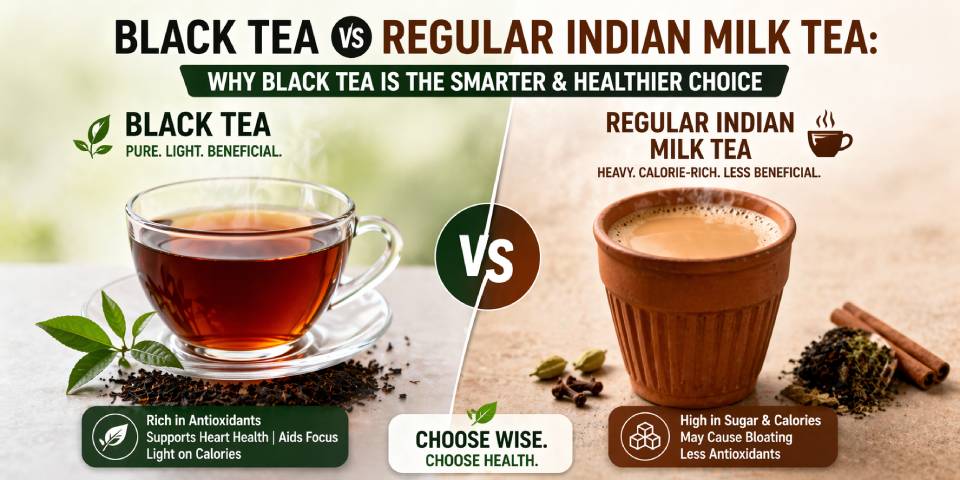
Tea was originally introduced in India by the British. However, instead of adopting it in its original form, we modified it by adding milk and sugar to enhance taste and palatability. While this made tea more enjoyable, it significantly reduced its health benefits.
Research shows that in countries like Japan, China, and various European nations, tea is mostly consumed as black tea or a herbal decoction without milk. This is one of the primary reasons these cultures experience the full medicinal potential of the tea leaf—a practice Indians should seriously consider for better long-term health.
In India, tea is a daily ritual in almost every household. Whether it’s your morning kickstart or evening refreshment, tea plays a massive role in our lifestyle. But when we look at the debate of black tea vs milk tea, which one truly aligns with a healthy lifestyle?
To help us understand this from an Ayurvedic perspective, we have insights from Dr. Manoj M. Deshpande, a highly qualified Ayurvedacharya with over 25 years of experience in the field of Ayurveda. Holding a Bachelor of Ayurvedic Medicine and Surgery (B.A.M.S.), Dr. Deshpande is a renowned specialist in Ayurvedic treatments and is recognized as the Best Ayurvedic Doctor in Pune, PCMC, & Mumbai.
With his extensive expertise in managing complex disorders like Psoriasis and Urticaria, Dr. Deshpande emphasizes that what we consume daily—including our tea—directly impacts our skin health and internal balance. With his dedication to high-quality patient care, he sheds light on a vital question:
Is your daily cup helping your health—or silently harming it?
Today, we also see a rapid rise in tea stalls and branded tea outlets across cities and villages. Large groups of people gather there daily, often consuming multiple cups of tea. In reality, this habit may be silently harming health. In clinical practice, many individuals report drinking 3–5 cups of tea per day, which can lead to dependency and long-term health concerns. Hence, consuming tea in a scientific and mindful way becomes very important.
When we compare black tea and regular Indian milk tea (chai), the difference is more significant than most people realize. Let’s understand why black tea stands out as the healthier and smarter option.
What is Black Tea?
Black tea is made by brewing tea leaves in water without adding milk or sugar. It is rich in antioxidants, almost zero in calories, and widely considered one of the healthiest beverages after water.
What is Indian Milk Tea?
Milk tea (chai) is made by boiling tea with milk, sugar, and often spices. While it tastes rich and comforting, it comes with hidden health drawbacks when consumed regularly.
Why Black Tea is the Better Choice?
1. Powerful Antioxidants – The Real Game Changer
Black tea is packed with polyphenols, which:
- Fight free radicals
- Slow down aging
- Reduce inflammation
👉 Adding milk to tea actually reduces the absorption of these antioxidants, making milk tea less effective for health.
2. Supports Weight Loss & Fitness Goals:
Black tea is:
- Zero calories (without sugar and milk)
- Boosts metabolism
- Helps in fat burning
On the other hand, milk tea contains extra calories from milk and sugar, making it a poor choice for weight management.
3. Better for Digestion:
Black tea:
- Helps reduce bloating
- Improves gut health
- Can be taken after meals
Milk tea, especially when over-boiled, often leads to:
- Gas
- Acidity
- Heaviness
- Sour taste in the mouth (mouth acidity) in some individuals
4. Heart-Friendly Beverage:
Regular black tea consumption may:
- Improve blood circulation
- Lower bad cholesterol
- Support heart health
- Excess milk tea (especially sugary) can increase long-term risks like obesity and metabolic issues.
5. Clean Energy Without Heaviness:
Black tea provides:
- Mild caffeine boost
- Better focus and alertness
Milk tea gives a temporary energy spike due to sugar—but often followed by a crash.
The “fresh” feeling after drinking milk tea is largely due to sugar. Sugar creates a dopamine boost in the brain, which gives a temporary feeling of energy and satisfaction. This can lead to dependency, as sugar has a strong addictive potential—even higher than many substances. In contrast, the alertness and focus come from caffeine, which is present in black tea as well. So the perceived “extra freshness” from milk tea is largely psychological and sugar-driven.
Advantages and Disadvantages of Milk Tea
While Indian milk tea (Chai) is a comforting staple in our culture, it is important to understand its dual nature. From an Ayurvedic perspective, how we prepare our tea determines whether it acts as a stimulant or a toxin.
The Advantages (The Appeal)
- Energy Boost: The combination of caffeine and sugar provides an immediate spike in energy, helping with alertness during a busy day.
- Palatability: Milk neutralizes the natural bitterness and astringency of tea leaves, making it a soothing and tasty beverage for the Indian palate.
- Satiety: Because of the fat content in milk, a cup of tea can feel more filling, often acting as a bridge between meals.
The Disadvantages (The Health Impact)
- Despite its popularity, regular consumption of milk tea—especially with sugar—carries significant health risks that Dr. Manoj Deshpande often highlights in his clinical practice:
- Neutralizes Antioxidants: Research indicates that the protein (casein) in milk binds with the catechins (antioxidants) in tea. This prevents your body from absorbing the heart-healthy benefits that tea is supposed to provide.
- Metabolic Risks: The high sugar content common in milk tea increases the risk of insulin resistance, weight gain, and Type 2 Diabetes.
- Digestive Distress: In Ayurveda, mixing milk with fermented or acidic substances can create Viruddha Ahara (incompatible food). For many, this leads to bloating, acidity, and weakened digestion.
- Sugar Addiction & Dopamine Spikes: Regular consumption of sugary tea creates a cycle of addiction. The repeated dopamine spikes lead to frequent cravings and dependency, making it hard to go a day without multiple cups.
- Impact on Skin Health: As a specialist in skin diseases like Psoriasis and Urticaria, Dr. Deshpande notes that the “Pitta-aggravating” nature of fermented tea combined with sugar and milk can often worsen inflammatory skin conditions.
In simple terms: While milk tea excels in taste, it fails to deliver the medicinal benefits that pure black tea or herbal decoctions offer.
Best Way to Prepare Black Tea (For Maximum Benefits):
Ingredients:
- 1 cup water
- 1 tsp tea leaves or powder
Method:
- Boil water
- Once it comes to a boil, switch off the gas
- Add tea leaves/ powder after turning off the heat
- Cover and let it steep for 2–3 minutes
- Strain and serve
- Optional: Add lemon for taste
- Avoid sugar for best results
This method prevents bitterness. If tea leaves are boiled directly in water for long, it releases excessive tannins, making the tea overly bitter and less palatable.
You can also add spices like ginger, cardamom, cinnamon, or cloves. These not only reduce bitterness but also enhance health benefits, as they are strong antioxidants that help boost metabolism and improve gut health.
Avoid adding sugar or even honey regularly. While honey may seem like a better alternative, it is still a form of sugar and can lead to similar dependency if used daily.
Milk Tea – If You Still Want It:
If you cannot avoid milk tea completely:
- Use less sugar
- Avoid over-boiling
- Limit to 1 cup per day
Final Verdict: Make the Smarter Switch
Let’s keep it simple:
For health, fitness, digestion, and long-term wellness → Black Tea wins clearly
Milk tea → occasional comfort drink, not a daily habit
Pro Tip: Start Small
You don’t have to quit milk tea overnight.
- Replace 1 cup daily with black tea
- Gradually reduce sugar
- Notice the difference in energy and digestion
Your taste buds adapt over time. Due to lifelong habits of consuming high sugar and salt, our taste preferences are conditioned accordingly. However, if you consistently drink black tea without milk and sugar for 3–4 weeks—even if you don’t like it initially—your taste buds will reset. Within a month, you may start preferring black tea and find sugary tea less appealing. This is how habit transformation works—consistency is key.
Conclusion:
Your daily tea habit can either support your health or slowly work against it. While milk tea may comfort your taste buds, black tea supports your body from within.
Even small habits like 1–2 cups of sugary tea can add significant extra sugar to your body. For example, one teaspoon of sugar contains around 5 grams, but most people add 2–3 teaspoons per cup. Two cups of tea can easily add 30 grams of sugar (~120 calories), which may require 30–35 minutes of walking just to burn. This unnecessary sugar load contributes to inflammation, metabolic stress, and long-term health issues.
Sometimes, the simplest change—like switching your tea—can create the biggest health impact.
If you are struggling with acidity, weight gain, or persistent skin issues, your daily tea habits might be playing a role. Don’t just change your tea—change your life with a personalized Ayurvedic roadmap. Visit our clinic Kalpataru Ayurved Chikitsalaya™ or Consult Dr. Manoj M. Deshpande, the leading Ayurvedic Doctor in Pune, PCMC,
Conclusion:
While milk tea is not “poisonous,” regular consumption can be detrimental to long-term health. Adding milk to tea neutralizes its natural antioxidants (catechins), stripping away the heart-healthy benefits. Furthermore, the combination of milk, tea leaves, and sugar can lead to weight gain, insulin resistance, and digestive issues. In Ayurveda, this combination is often considered Viruddha Ahara (incompatible food), which can create toxins (Amavisha) in the body over time.
Generally, black tea is less likely to cause acidity than milk tea if consumed in moderation. However, if brewed too strong or consumed on an empty stomach, the tannins and caffeine in black tea can stimulate gastric acid production. To avoid acidity, Dr. Deshpande recommends not over-boiling the tea and avoiding it first thing in the morning if you have a sensitive stomach.
Milk tea can indirectly contribute to higher blood pressure. While tea itself contains compounds that support vascular health, adding milk negates these effects. Additionally, the high sugar content often found in Indian milk tea contributes to weight gain and inflammation, both of which are primary risk factors for hypertension (high blood pressure). Pure black tea, conversely, is often linked to improved blood vessel function.
Essentially, yes. In a culinary and health context, a decoction is a method of extraction by boiling herbal or plant material (like tea leaves) to dissolve the chemicals of the material. Black tea is a form of decoction where tea leaves are boiled in water without the addition of milk. In Ayurveda, this “decoction” or Kadha is preferred because it allows the medicinal properties of the herbs to be fully absorbed by the body without interference from dairy fats.