
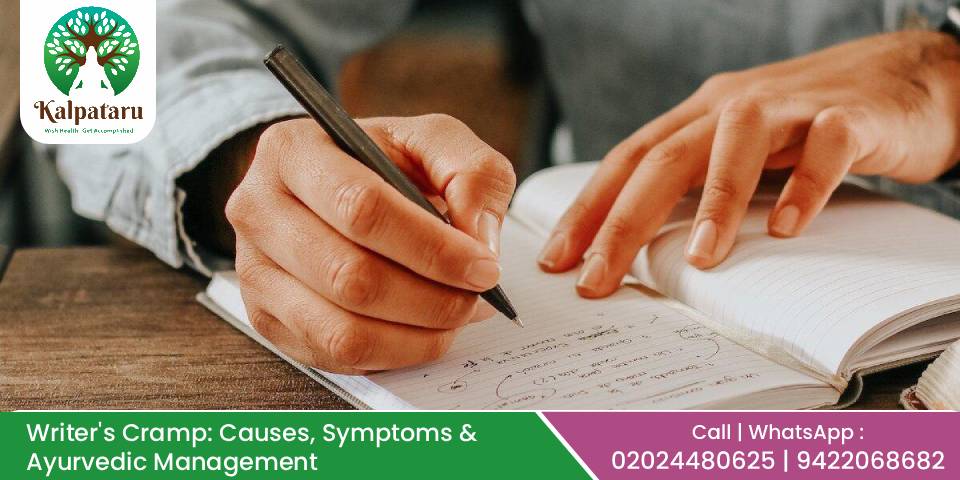
Writer’s Cramp, or Graphospasm, is a type of task-specific focal dystonia—a neurological condition that causes involuntary muscle contractions when performing a particular activity, usually writing. While it sounds simple, many individuals—students, writers, IT professionals, and even office workers—experience this debilitating condition.
From an Ayurvedic viewpoint, Writer’s Cramp is closely linked with Vata imbalance, especially in the Snayu (tendons) and Mamsa (muscle) tissues. Today, modern lifestyle habits such as long hours of typing, excessive gadget usage, stress, and poor posture have increased the prevalence of this problem.
This blog explains Writer’s Cramp from both Ayurveda and modern science — along with treatment options and preventive lifestyle tips.
What is Writer's Cramp?
Writer’s Cramp is a neuromuscular movement disorder falling under focal hand dystonia.
Modern Science Causes:
- Overuse of hand muscles
- Repetitive fine motor tasks (writing, designing, coding)
- Poor hand posture
- Abnormal brain signals from the sensorimotor cortex
- Stress and performance anxiety
- Long-term ergonomics stress
Types:
- Simple Writer’s Cramp: Symptoms arise only while writing.
- Dystonic Writer’s Cramp: Symptoms occur during various hand activities, like shaving, buttoning, typing.
Symptoms of Writer's Cramp:
- Fingers gripping pen too tightly
- Pain, stiffness, or cramps in fingers or wrist
- Involuntary movements while writing
- Poor handwriting
- Dropping pen frequently
- Difficulty controlling hand muscles
- Hand fatigue even after short writing
In many patients, symptoms worsen under stress or when writing fast.
Writer's Cramp in Ayurveda:
Ayurveda describes such conditions under:
“Vata Vyadhi”
Writer’s Cramp is primarily due to Vata Dosha aggravation, especially Vyana Vata, which governs:
- Fine motor skills
- Neuromuscular coordination
- Movement of muscles, tendons, and nerves
Affected Ayurvedic Elements:
- Snayu (Tendons)
- Mamsa (Muscles)
- Majja Dhatu (Nervous system)
- Udaan & Vyana Vata (Fine movements & coordination)
Ayurvedic Nidana (Causes):
- Excessive writing, typing, instrument use
- Long sitting and wrong posture
- Mental stress, anxiety
- Dry, Vata-increasing foods
- Lack of sleep
- Overthinking and pressure to perform
Samprapti (Pathogenesis):
Due to overuse and stress, Vata gets aggravated → affects nerves and tendons → leading to stiffness, tremors, loss of coordination, and muscle fatigue characteristic of Writer’s Cramp.
Ayurvedic Treatment for Writer's Cramp:
1. Snehana (Oleation Therapy):
Warm medicated oil massage helps relax the muscles and soothe aggravated Vata.
Commonly used oils:
- Mahanarayan Taila
- Dhanwantharam Taila
- Ksheerabala Taila, Mashsaindhav Taila etc.
2. Swedana (Steam Therapy):
Helps reduce muscle stiffness and improve circulation.
3. Nasya Therapy:
Administering medicated oils through the nostrils helps strengthen the nervous system and improve hand coordination.
Beneficial oils:
- Anu Taila
- Ksheerabala Oil
4. Jalaukavacharana (Leech Therapy):
Useful in cases with:
- Muscle spasm and pain
- Poor circulation
- Inflammation
Leech therapy increases microcirculation and reduces localized Vata and Pitta imbalance.
5. Localised Basti-Hasta Basti:
Medicated oil retention over wrist/hand helps relax deep-seated neuromuscular tension.
6. Panchakarma Therapies:
- Shirodhara – reduces stress-related dystonia
- Abhyangam + Swedana – improves hand mobility
- Virechana (Detox) – removes Pitta toxins affecting nerves
- Basti (Medicated enema) – the best treatment for Vata balancing
7. TAILADHARA:
In this condition, Tailadhara is also very beneficial. In Tailadhara therapy, medicated oils such as Dhanwantharam oil, Bala-Ashwagandha oil, Pinda oil, or Mashsaindhav oil are gently warmed and poured in a continuous stream over the affected part for about fifteen to twenty or even thirty minutes. Along with this, side-by-side massage is performed. This is a Kerala-style Panchakarma therapy. Tailadhara helps strengthen muscles, nerves, and even the minor bones of the hand, thereby reducing Writer’s Cramp. This treatment is usually done for seven consecutive days.”
8. Ayurvedic Herbs for Writer's Cramp:
- Ashwagandha – improves muscle strength, reduces stress
- Bala (Sida cordifolia) – strengthens nerves
- Shankhpushpi – enhances coordination and reduces anxiety
- Guggulu formulations – reduce inflammation
- Brahmi – enhances neuromuscular signals
- Pasmkashtha – Strengthens bones and muscles
Modern Treatment Approaches:
Modern medical management usually includes:
- Physiotherapy
- Occupational therapy
- Hand retraining exercises
- Use of ergonomic tools
- Botox injections (in severe cases)
- Mild muscle relaxants (short-term use only)
Ayurveda provides a safer long-term complementary treatment that works on the root cause by balancing Vata and restoring neuromuscular health.
Lifestyle & Home Remedies:
Warm Oil Massage:
Daily 10–15 minutes of warm sesame oil massage on hand and wrist.
Hand Stretches:
- Wrist flexor/extensor stretch
- Finger opening-closing exercise
- Grip relaxation drills
Reduce Stress:
Stress directly worsens dystonia. Practice:
- Meditation
- Deep breathing
- Yoga Nidra
Correct Posture:
- Use ergonomic pen or thick-grip pen
- Write slowly and take breaks
- Maintain proper hand and elbow support
Diet Tips (Vata Pacifying Diet):
- Warm, cooked foods
- Ghee, milk, nuts
- Avoid cold, dry food
- Reduce stimulants like caffeine
- Stay hydrated
VATA & PRITHVI MAHABHOOTA BALANCING:
If tremors are present, it means Vata Mahabhoota qualities have increased in the body. To counter this, it is essential to increase Prithvi Mahabhoota qualities through diet and lifestyle. Foods such as black gram (urad dal), dry fruits, dates, and ghee are beneficial. For non-vegetarians, meat soup is also strengthening. Additionally, Prithvi-enhancing herbs like Padmakastha, Khair, Mandur, and Laksha are used in treatment. These help reduce tremors and improve stability.”
When to Seek Medical Help?
- If writing becomes painful
- If symptoms worsen over time
- If there is tremor or hand weakness
- If daily tasks are affected
Early intervention leads to faster recovery.
Ayurvedic Perspective: Final Thought
Writer’s Cramp is not just a simple muscle problem—it is a neuromuscular coordination disorder with strong Vata involvement. Ayurveda offers a holistic approach through:
- Panchakarma
- Nasya
- Local therapies
- Nervine strengthening herbs
- Diet and lifestyle corrections
When combined with modern physiotherapy and ergonomic habits, most patients experience significant improvement.