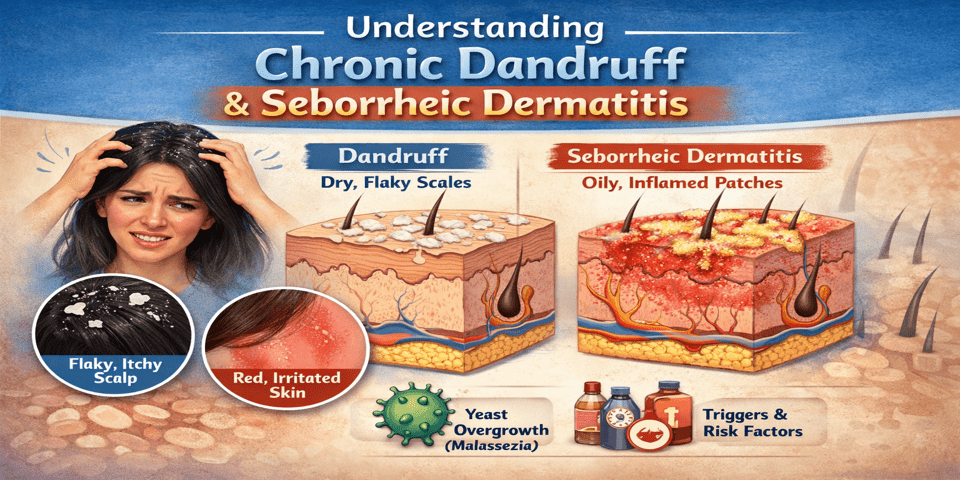
Dandruff is characterised by white or yellowish flakes on the scalp, itching, and dryness. In some individuals, the condition becomes severe and is associated with redness, oily patches, and irritation. This condition is known as seborrheic dermatitis.
In Ayurveda, dandruff is commonly associated with Darunaka, which occurs due to imbalance of Vata and Kapha doshas. When these doshas become aggravated, the scalp becomes dry, itchy, and flaky.
Seborrheic dermatitis may also involve excess oil production along with inflammation, making the scalp more sensitive.
Ayurveda also describes a concept called Krimi, which does not only refer to intestinal worms but also includes various microscopic organisms that may affect different parts of the body, including the scalp. Conditions such as Raktaja Krimi and Shirogata Krimi are described in Ayurvedic texts and may contribute to scalp disorders like dandruff (Darunaka) and seborrheic dermatitis. Therefore, treatments aimed at Krimi management and blood purification (Rakta Shodhana) are sometimes an important part of Ayurvedic therapy for chronic scalp conditions.
Common Causes of Chronic Dandruff:
Several factors can contribute to persistent dandruff and scalp irritation:
- Excessive dryness of the scalp
- Excess oil production
- Stress and poor sleep
- Irregular eating habits
- Consumption of oily, spicy, or junk food
- Poor scalp hygiene
- Use of harsh chemical hair products
- Seasonal changes and pollution
- Another important factor that is often overlooked is nutritional deficiency. Proper nutritional status plays a significant role in maintaining scalp and skin health. Deficiencies of nutrients such as Vitamin B12, Vitamin D3, and adequate protein intake may contribute to scalp problems including dandruff and seborrheic dermatitis. Therefore, identifying and correcting nutritional deficiencies is an important step in long-term management of these conditions.
Understanding these causes helps in creating an effective scalp care routine.
Ayurvedic Scalp Care Routine for Healthy Scalp:
1. Regular Oil Massage (Shiro Abhyanga):
Oil massage is one of the most important Ayurvedic practices for scalp health. It nourishes the scalp, improves blood circulation, and reduces dryness.
Herbal oils used in Ayurveda help balance scalp doshas and strengthen hair roots.
Common Ayurvedic oils used for dandruff include:
- Neem oil – helps control fungal growth and scalp infection
- Bhringraj oil – nourishes hair roots and improves scalp health
- Coconut oil infused with herbs – soothes scalp irritation
- Brahmi oil – reduces stress and supports scalp nourishment
Massage the scalp gently for 10–15 minutes and leave the oil for at least 30–60 minutes before washing.
There is a common misconception that applying oil worsens dandruff. Many people believe that oil should be completely avoided in dandruff treatment. However, when proper medicated Ayurvedic oils are used, they actually help reduce scalp dryness, nourish the scalp, and support overall scalp health. Regular oil application can therefore be an important part of scalp hygiene when done correctly. Ideally, the oils used should be medicated herbal oils prepared in a genuine sesame oil base, as traditionally recommended in Ayurveda.
2. Use Mild Herbal Hair Cleansers:
Frequent use of chemical shampoos can disturb the natural oil balance of the scalp.
Ayurveda recommends using herbal hair cleansers that clean the scalp without causing excessive dryness.
Common herbal ingredients include:
- Reetha (Soapnut) – natural cleanser for hair and scalp
- Shikakai – removes dirt while maintaining scalp moisture
- Amla – improves scalp health and strengthens hair
These natural ingredients help remove flakes while keeping the scalp healthy.
3. Herbal Scalp Packs:
Herbal scalp packs are beneficial for controlling dandruff and soothing scalp inflammation.
Some commonly used Ayurvedic herbs include:
- Neem powder – antibacterial and antifungal properties
- Triphala – supports detoxification of the scalp
- Amla powder – improves scalp nourishment
- Fenugreek (Methi) – reduces dryness and itching
These herbal packs can be applied once or twice a week to reduce flakes and calm scalp irritation.
Various forms of Lepa Chikitsa (herbal paste therapy) are also used in Ayurveda for scalp disorders. Different herbal pastes can be prepared using the above-mentioned herbs and applied directly to the scalp to help reduce inflammation, dryness, and itching while supporting scalp healing.
4. Maintain Proper Scalp Hygiene:
Keeping the scalp clean is essential for managing dandruff.
Important scalp hygiene practices include:
- Washing hair regularly according to scalp type
- Avoiding excessive scratching of the scalp
- Keeping hair and scalp dry after washing
- Avoiding sharing combs or towels
- Proper hygiene helps prevent fungal growth and scalp infections.
5. Follow a Healthy Ayurvedic Diet:
Diet plays an important role in maintaining scalp health.
Ayurveda recommends avoiding foods that aggravate Kapha and Vata dosha, which can worsen dandruff.
Foods to Avoid:
- Oily and fried foods
- Excessive sugar and bakery items
- Fermented and packaged foods
- Very spicy or junk food
Foods that Support Scalp Health:
- Fresh fruits and vegetables
- Whole grains
- Nuts and seeds in moderation
- Adequate water intake
- Herbal drinks and warm water
A balanced diet supports healthy skin and scalp from within.
Maintaining proper nutritional balance is equally important. Ensuring adequate levels of essential nutrients such as Vitamin B12, Vitamin D3, and proteins helps support skin regeneration, scalp health, and immune balance, which can play an important role in controlling chronic dandruff.
6. Stress Management and Lifestyle Balance:
Stress is a common trigger for chronic dandruff and seborrheic dermatitis.
Ayurvedic lifestyle practices can help reduce stress and improve overall health:
- Regular exercise or yoga
- Meditation and breathing exercises
- Proper sleep routine
- Limiting screen time and late-night work
These practices help balance the body’s natural systems and improve scalp health.
In many individuals, especially students during examination periods or young professionals during work stress, dandruff and seborrheic dermatitis may worsen due to increased stress levels. Therefore, addressing the stress factor through appropriate Ayurvedic medicines and therapies is also an important part of treatment.
When to Consult an Ayurvedic Doctor?
If dandruff persists for a long time despite home remedies, it may require professional treatment.
Chronic seborrheic dermatitis may need personalised Ayurvedic medicines and therapies that address the root cause of the condition.
At Kalpataru Ayurvediya Chikitsalaya, Ayurvedic doctors evaluate each patient individually and recommend customised treatment plans that may include:
- Herbal internal medicines
- Medicated oils and scalp therapies
- Detoxification therapies like Panchakarma when required
- Diet and lifestyle guidance
Certain Kerala Panchakarma therapies may also be beneficial in chronic scalp conditions. Treatments such as Takradhara, Shirodhara, and Shiropichu are sometimes recommended depending on the patient’s condition.
In Shiropichu, a cotton pad soaked in medicated oil is placed on the scalp and gently bandaged so that the oil remains in contact with the affected areas for a longer duration. This helps reduce dryness, soothe scalp irritation, and promote healing of the affected scalp lesions.
This comprehensive approach helps control dandruff naturally and prevent recurrence.
Conclusion:
Chronic dandruff and seborrheic dermatitis can affect scalp health and confidence if not managed properly. Ayurvedic scalp care focuses on balancing the body, nourishing the scalp, and maintaining long-term health.
Following a regular routine that includes herbal oils, mild cleansers, scalp packs, healthy diet, and stress management can significantly improve scalp condition.
If the problem persists, consulting experienced Ayurvedic doctors can help identify the root cause and provide effective treatment.
At Kalpataru Ayurvediya Chikitsalaya, the focus is on providing safe, natural, and holistic Ayurvedic care for scalp disorders and overall well-being.