
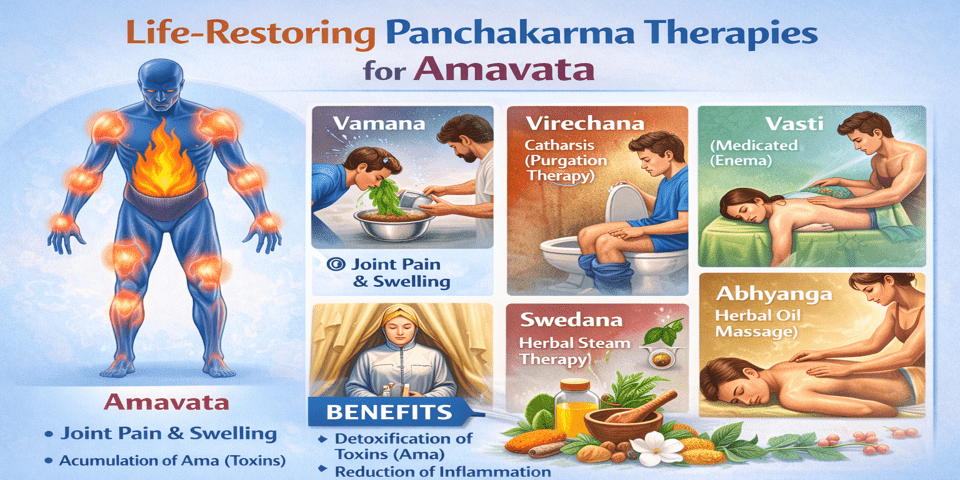
Amavata is a chronic inflammatory joint disorder described in Ayurveda that closely resembles Rheumatoid Arthritis (RA) in modern medicine. It is characterized by joint pain, swelling, stiffness, and systemic weakness.
Unlike conventional treatment that mainly focuses on symptom suppression, Ayurveda aims at treating the root cause through detoxification and Dosha balance. Among various Ayurvedic treatments for Amavata, Panchakarma therapy is considered one of the most effective and life-restoring approaches.
This comprehensive guide explains how Panchakarma helps in managing Amavata naturally and effectively.
What is Amavata?
In Ayurveda, Amavata is formed due to the combination of:
- Ama – Undigested metabolic toxins formed due to weak digestive fire (Agni)
- Vata Dosha – The bio-energy responsible for movement and nervous system regulation
When Ama accumulates in the body and combines with aggravated Vata, it gets deposited in joints, causing:
- Severe joint pain
- Swelling and tenderness
- Morning stiffness
- Reduced mobility
- Fatigue and heaviness
- Loss of appetite
If untreated, Amavata may progress to joint deformities and chronic disability.
Causes of Amavata (Rheumatoid Arthritis in Ayurveda):
Common causes include:
- Weak digestion (Agnimandya)
- Heavy, oily, incompatible foods (Viruddha Aahar)
- Sedentary lifestyle
- Daytime sleeping
- Chronic stress
- Suppression of natural urges
Modern medicine associates Rheumatoid Arthritis with autoimmune inflammation, which correlates with the Ayurvedic concept of Ama-induced systemic inflammation.
Why Panchakarma is Highly Beneficial in Amavata?
Panchakarma treatment for Amavata is not just detoxification. It is a structured therapeutic process that:
- Eliminates Ama (toxins)
- Balances aggravated Vata Dosha
- Reduces inflammation
- Clears blocked body channels (Srotas)
- Improves digestion and metabolism
- Prevents recurrence
By addressing the root cause, Panchakarma provides long-term relief rather than temporary symptom control.
Key Panchakarma Therapies for Amavata:
1. Langhana (Lightening Therapy):
This is the initial stage of treatment to reduce Ama.
It includes:
- Controlled fasting
- Light, easily digestible diet
- Digestive herbal medicines
Langhana improves digestive fire and prepares the body for deeper detoxification.
2. Swedana (Sudation Therapy):
Swedana is highly effective in reducing stiffness and swelling in Amavata.
Preferred types include:
- Ruksha Swedana (dry fomentation)
- Valuka Sweda (sand fomentation)
Benefits of Swedana:
- Reduces joint stiffness
- Improves circulation
- Decreases heaviness
- Enhances mobility
3. Virechana (Therapeutic Purgation):
Virechana helps eliminate inflammatory toxins from the body.
It:
- Reduces systemic inflammation
- Clears microchannels
- Enhances metabolic efficiency
- Improves absorption of medicines
This therapy is especially useful when inflammatory symptoms are dominant.
4. Basti Therapy (Medicated Enema) – The Most Important Treatment:
Basti is considered the most powerful therapy for Vata disorders. Since Amavata involves aggravated Vata, Basti plays a central role in treatment.
Types of Basti used in Amavata:
- Niruha Basti (decoction enema)
- Anuvasana Basti (medicated oil enema)
- Vaitarana Basti – A special type of Basti particularly indicated in Amavata, known for its strong action in removing Ama and relieving joint pain and stiffness.
- Tikta Ksheera Basti – Used especially in chronic or long-standing Amavata where Ama has reduced but Vata is highly aggravated. In this therapy, bitter herbs are boiled in milk and combined with medicated ghee before administration. This specialized Basti helps slow down joint degeneration, strengthens muscles and bones, and improves joint nourishment.
Benefits of Basti therapy:
- Balances Vata Dosha
- Nourishes joints
- Reduces chronic pain
- Prevents deformity
- Improves strength and immunity
In Ayurveda, Basti is often described as “half of all treatments” due to its systemic benefits.
5. Dhara Therapy with Kanji (Fermented Herbal Liquid Therapy):
Dhara is considered one of the main supportive therapies in Amavata management.
In this procedure, Kanji—a fermented Ayurvedic preparation—is gently heated and continuously poured in a stream over the affected joints.
This process helps:
- Disperse inflammatory and pain-producing factors within the joints
- Reduce localized swelling
- Decrease accumulated Ama
- Pacify aggravated Vata
As Ama and Vata reduce locally, patients often begin to experience gradual pain relief and improved joint mobility.
6. Jalaukavacharana (Leech Application):
Leech application is used when:
- A joint shows early signs of deformity
- There is intense throbbing pain
- Acute localized inflammation is present
Jalaukavacharana provides rapid pain relief by reducing local congestion and inflammatory factors. It is especially helpful for quick symptomatic relief in severely painful joints.
7. Agnikarma (Therapeutic Heat Cauterization):
When Amavata becomes chronic and deformities develop—especially in the wrists and fingers—Agnikarma is considered.
In this procedure:
- A specially designed metallic instrument (traditionally a gold probe) is heated using a controlled flame.
- Indirect thermal application is performed over specific points around the affected joint.
Agnikarma helps:
- Reduce chronic swelling
- Relieve persistent pain
- Improve local circulation
- Control progression of deformity
This therapy is particularly useful in long-standing cases where structural changes have already begun.
8. Lepana and Upanaha (External Therapies):
Herbal pastes and medicated poultices are applied locally to affected joints.
These therapies help:
- Reduce swelling
- Relieve tenderness
- Improve joint flexibility
- Provide faster pain relief
How Panchakarma Improves Quality of Life in Amavata?
Chronic joint pain often leads to:
- Poor sleep
- Emotional stress
- Reduced work capacity
- Long-term dependence on painkillers
A structured Panchakarma program can:
- Reduce dependence on analgesics
- Improve appetite and digestion
- Enhance energy levels
- Restore mobility
- Improve mental well-being
Many patients experience significant improvement in daily functioning after proper Ayurvedic treatment.
Diet and Lifestyle During Amavata Treatment:
For effective results, diet and lifestyle modifications are essential.
Recommended:
- Warm, freshly cooked food
- Light and digestible meals
- Regular meal timings
- Gentle yoga and stretching
- Stress management practices
To Avoid:
- Curd and cold foods
- Heavy, oily, and fried foods
- Daytime sleeping
- Excessive physical strain
Proper dietary discipline enhances the effectiveness of Panchakarma therapies.
When to Consider Panchakarma for Rheumatoid Arthritis?
You should consult an Ayurvedic physician if you experience:
- Persistent joint pain and swelling
- Morning stiffness lasting more than 30 minutes
- Recurring inflammatory episodes
- Dependence on long-term pain medication
Early intervention offers better outcomes and may prevent joint deformities.
Integrative Approach: Ayurveda and Modern Medicine
Modern medicine focuses on immunosuppressants and anti-inflammatory drugs for Rheumatoid Arthritis. While effective in controlling inflammation, long-term use may have side effects.
Ayurveda complements modern treatment by:
- Addressing digestive imbalance
- Reducing toxin load
- Strengthening immunity
- Supporting natural healing mechanisms
An integrative approach under medical supervision can improve long-term disease management.
Conclusion:
Panchakarma therapies offer a powerful and holistic solution in the treatment of Amavata (Rheumatoid Arthritis). By eliminating Ama, balancing Vata, and rejuvenating body systems, Panchakarma not only reduces pain and inflammation but also restores vitality and quality of life.
Early diagnosis, personalized treatment planning, proper diet, and disciplined lifestyle are key to long-term success.
If you or your loved ones are struggling with chronic joint pain, consulting an experienced Ayurvedic physician for Panchakarma treatment may be a transformative step toward recovery.