
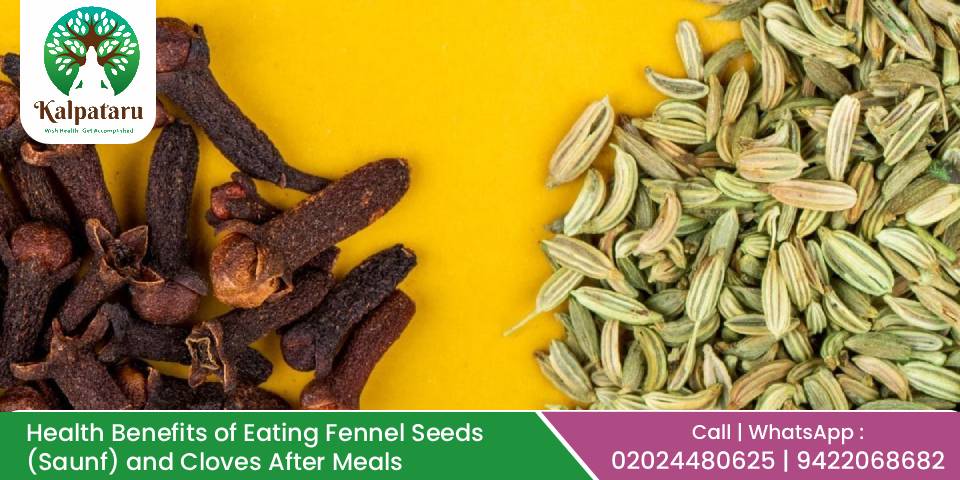
In Indian tradition, it is common to end a meal with a spoonful of fennel seeds (saunf) and sometimes a clove (laung). This simple ritual is not only meant to refresh the breath it has deep roots in Ayurveda and is supported by modern science.
Let’s explore how this age-old habit supports digestion, balances doshas, and enhances overall well-being
Fennel Seeds (Saunf) After Meals:
Ayurvedic Perspective:
In Ayurveda, fennel seeds are described as having Madhura Rasa (sweet taste) and a slightly Ushna (warm) nature. They pacify Pitta and Vata doshas, and to some extent balance Kapha, making them a perfect post-meal digestive.
Key Ayurvedic Actions:
- Deepana & Pachana (Digestive stimulant): Fennel kindles Agni (digestive fire), aiding proper digestion and assimilation of food.
- Shwasahara (Respiratory benefit): Its subtle aroma clears srotas (channels), preventing post-meal heaviness or bloating.
- Mutral (Diuretic effect): Helps eliminate excess Ama (toxins) and water retention.
- Mukhdoorgandh Nashak (Mouth freshener): The cooling aroma naturally freshens breath and cools the body after meals.
Additional Ayurvedic & Modern Insights:
- Women’s Health: Fennel supports hormonal balance and menstrual health. It helps relieve menstrual discomfort, delayed or scanty bleeding, and menopausal symptoms. In Ayurveda, fennel is also used in certain infertility treatments, both orally and in Panchakarma therapies.
- Brain & Nervous System: Fennel contains bioactive compounds that influence GABA neurotransmitters, improving memory, calmness, and sleep quality. Hence, it is considered a Medhya Dravya (a herb that enhances intellect and emotional balance).
- Lactation: Postpartum, fennel helps stimulate milk secretion and supports maternal well-being.
- Detoxification & Urinary Health: Its mild diuretic and alkalizing effects help reduce urinary acidity and maintain a healthy acid-alkaline balance.
Modern Science’s View:
- Rich in volatile oils (Anethole): Enhances gastric enzyme secretion and reduces indigestion, gas, and bloating.
- High in antioxidants & fiber: Promotes gut health and prevents constipation.
- Cooling effect: Prevents acidity and heartburn after meals.
Best for: People with acidity, indigestion, bloating, or bad breath.
Cloves (Laung) After Meals:
Ayurvedic Perspective:
Cloves possess Katu-Tikta Rasa (pungent and slightly bitter taste) and Ushna Virya (hot potency). They balance Kapha and Vata doshas, stimulating digestion and improving metabolic efficiency.
Key Ayurvedic Actions:
- Agni Deepaka (Boosts digestive fire): Prevents formation of Ama (toxins) by ensuring complete digestion.
- Krimighna (Anti-parasitic): Destroys harmful gut microbes and worms.
- Kaphahara (Reduces mucus): Clears excess phlegm that accumulates after heavy meals.
- Mukha Shodhana (Oral health): Acts as a natural antiseptic—preventing bad breath, toothache, and oral infections.
Special Ayurvedic Insight – Vajikaran Chikitsa
Clove is also used as an important ingredient in formulations for Aphrodisiac treatment, known as Vajikaran Chikitsa.
This therapy aims to enhance reproductive vitality, strengthen the nervous system, and improve sexual wellness. The warming and stimulating properties of clove make it a valuable component in these rejuvenative preparations.
Modern Research Insight
Modern studies reveal that eugenol, the primary bioactive compound in clove, has a protective effect on the endothelium (the inner lining of blood vessels).
This supports healthy circulation and cardiovascular function, thereby benefiting overall organ health.
Modern Science’s View
- Eugenol: Enhances digestive enzyme secretion, reduces gas, and protects the stomach lining.
- Anti-microbial action: Inhibits harmful bacteria in the mouth and gut.
- Oral health: Prevents gum infections and acts as a natural mouth freshener.
Best for: People with weak digestion, bloating, or recurrent mouth/throat issues.
Fennel Seeds + Cloves: A Perfect Digestive Duo
When taken together after meals, fennel and clove complement each other beautifully:
- Fennel cools and soothes digestion, preventing acidity.
- Clove warms and stimulates digestion, preventing heaviness.
- Together, they balance Agni (digestive fire) without aggravating Pitta or Vata.
That’s why many Indian restaurants offer a mix of fennel seeds and cloves as mukhwas (mouth freshener and digestive aid) after meals.
How to Use Them After Meals?
- Traditional way: Chew 1 teaspoon of fennel seeds with half or one clove after meals.
- For acidity-prone people: Use more fennel, less clove.
- For weak digestion or bloating: Use more clove, with fennel to balance.
- For oral health: Keep clove in the mouth and chew slowly; add fennel for freshness.
Precautions:
- Cloves are potent—use in moderation. Overuse may cause excessive heat or acidity.
- Pregnant women should avoid excessive clove consumption.
- People with stomach ulcers should prefer fennel over clove.
Conclusion:
Eating fennel seeds (saunf) and cloves (laung) after meals is more than a cultural habit—it’s an Ayurvedic secret supported by modern science.
- Fennel cools, soothes, and refreshes.
- Clove stimulates, protects, and strengthens digestion.
Together, they enhance digestion, refresh the breath, and support gut, oral, and cardiovascular health—while also contributing to reproductive vitality through Vajikaran Chikitsa.
So, the next time you finish your meal, chew a few fennel seeds with a clove—and let your body thank you for following this timeless Ayurvedic wisdom.