
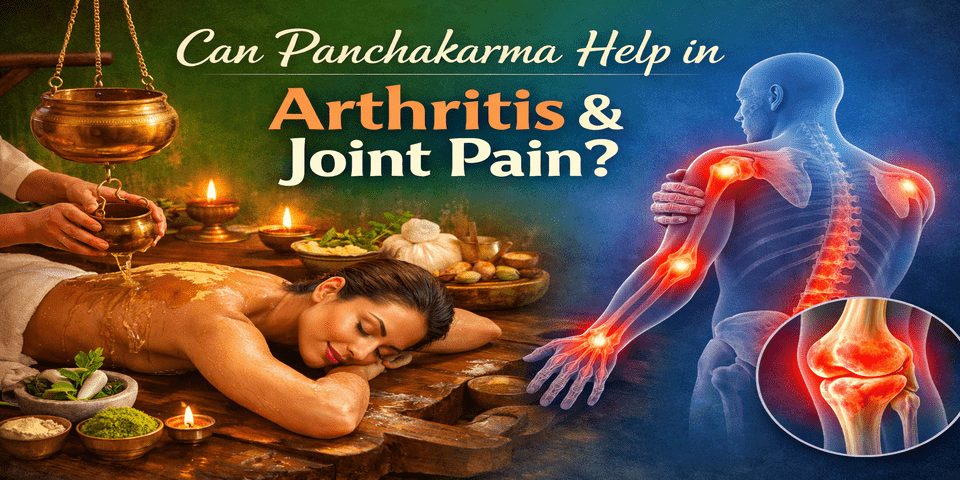
Arthritis and chronic joint pain are among the most common causes of disability and discomfort worldwide. While modern medicine focuses on symptom management using painkillers and anti-inflammatory drugs, Ayurveda offers a holistic approach aimed at addressing the root causes of joint degeneration and pain. Central to this approach is Panchakarma — a time-tested Ayurvedic detoxification and rejuvenation therapy.
What Is Arthritis?
“Arthritis” isn’t a single disease but an umbrella term describing joint inflammation, swelling, stiffness, and pain. The most common types include:
- Osteoarthritis (degenerative joint disease)
- Rheumatoid arthritis (autoimmune inflammation)
- Gouty arthritis (uric acid crystal-related)
- Post-viral and other inflammatory joint conditions
In Ayurvedic terms, such disorders are often linked with an imbalance in Vata Dosha and the accumulation of Ama (toxins) in the joints.
What Is Panchakarma?
Panchakarma literally means “five actions” — a set of five major therapeutic procedures designed to:
- Eliminate deep-seated toxins (Ama)
- Balance the three doshas (Vata, Pitta, Kapha)
- Restore healthy digestion and metabolism
- Rejuvenate body tissues (Dhatus)
- It is traditionally divided into three main stages:
- Purvakarma (preparatory measures — oleation & sweating)
- Panchakarma (the five cleansing therapies)
- Rasayana (rejuvenation and nourishment phase)
These therapies are personalized based on your constitution (Prakriti), the nature of joint disease, and severity of symptoms.
How Panchakarma Helps in Arthritis & Joint Pain?
- Detoxification and Removal of Ama: According to Ayurveda, Ama — toxic metabolic residue — accumulates in tissues due to poor digestion and improper elimination, leading to inflammation in joints. Panchakarma therapies such as Virechana (purgation) and Basti (medicated enemas) help flush out this Ama, reducing inflammation and pain.
- Balancing Vata Dosha: Vata dosha governs movements in the body. Its imbalance causes dryness, cracking, stiffness, and pain in joints. Panchakarma procedures — particularly Basti with medicated oils — pacify aggravated Vata, nourish joint tissues, and improve flexibility.
- Improving Circulation & Joint Lubrication: Therapies such as Abhyanga (herbal oil massage) and Swedana (steam therapy) significantly enhance blood flow to joints, improve lubrication, reduce stiffness, and soothe muscle tension around affected areas.
- Strengthening Digestion (Agni): Central to Ayurveda is the concept of Agni — the digestive fire. A strong Agni reduces toxin formation, enhances nutrient absorption, and supports tissue repair — all crucial for joint health and long-term recovery.
- Rejuvenation of Tissues: After detox, the Rasayana phase focuses on nourishing body tissues with herbal formulations (like Ashwagandha, Shatawari, Padmak, Guggulu, etc.), medicated ghrita (clarified butter), and diet, which supports bone density, immune health, and connective tissue strength.
Key Panchakarma Therapies Used for Joint Health:
Here are some of the most effective Panchakarma therapies used in arthritis care:
- Abhyanga: Warm medicated oil massage to reduce pain and stiffness
- Swedana: Herbal steam therapy for improved circulation and detox
- Basti: Medicated enema to balance Vata and nourish tissues — revered as the best therapy for joint disorders
- Virechana: Purgation to cleanse the gastrointestinal tract and reduce Ama
- Janu Basti / Kati Basti: Localized oil pooling over knees/lower back to deeply nourish joints
Each therapy targets a specific aspect of joint pain — from systemic detox to localized healing.
Additional Specialized Panchakarma & Supportive Therapies for Arthritis:
Raktamokshana (Therapeutic Bloodletting):
Apart from the commonly known Panchakarma therapies, Raktamokshana plays a significant role in arthritis management, especially when Pitta Dosha and Rakta (blood tissue) are also involved along with Vata or Kapha.
There are two main types of Raktamokshana used in joint disorders:
- Local Venesection: In this method, a small quantity of blood is removed from veins around the painful joint. This helps reduce pressure caused by impure blood, leading to quick relief from swelling, inflammation, burning sensation, and pain. This therapy is especially beneficial in knee pain and osteoarthritis cases where dilated veins or varicose veins are present around the joint.
- Jalaukavacharana (Leech Therapy): In chronic arthritis conditions, where toxins are deeply accumulated in joint tissues, Jalaukavacharana is one of the most effective detoxification techniques. Medicinal leeches remove vitiated blood, reduce inflammation, improve circulation, and provide significant pain relief in long-standing arthritis cases.
Dhara Therapy (Dhanyamla Dhara):
When Ama remains in a partially digested stage (Jirna Avastha) and a particular joint becomes extremely swollen, stiff, and loses full range of motion, localized Dhara therapy becomes highly beneficial.
In Dhanyamla Dhara, a warm medicated fermented liquid (Dhanyamla or Kanji) is poured from a height of approximately 7 inches over the affected joint for 15–20 minutes daily.
This therapy helps reduce stiffness, inflammation, heaviness, and improves joint mobility significantly.
Agnikarma (Thermal Micro-Cauterization Therapy):
Agnikarma is considered a powerful supportive Panchakarma procedure, especially when ligament or tendon involvement causes severe pain and joint deformity.
In this therapy, a heated Panchadhatu (five-metal) or gold rod is carefully applied at specific points. Sometimes, it is also performed using controlled flame techniques.
Agnikarma has no long-term side effects when performed by an experienced physician and is a highly effective pain-relieving modality in chronic joint conditions.
Advanced Basti Therapies:
Ayurveda states that Basti alone contributes nearly 50% of treatment success in joint disorders (Sandhivata).
Various specialized Bastis are used, such as:
- Yoga Basti
- Kala Basti
- Tikta Ksheera Basti
In Tikta Ksheera Basti, bitter herbs mixed with medicated milk and ghee are administered as a retention enema using a controlled syringe method.
This deeply pacifies aggravated Vata, nourishes bone and joint tissues, and helps reverse degenerative changes.
Gout & Lifestyle-Related Arthritis Management:
Modern lifestyle errors such as improper diet, excessive spicy and junk food, prolonged sitting, late-night wakefulness, and stress contribute to increased uric acid levels, leading to gouty arthritis.
In such cases:
- Guduchi-based Basti
- Virechana
- Jalaukavacharana
have shown excellent results.
Ayurvedic medicines and Panchakarma therapies help naturally reduce uric acid levels and prevent recurrent gout attacks.
Psoriatic Arthritis – Preventive & Curative Role of Ayurveda:
Around 20–30% of psoriasis patients may develop psoriatic arthritis in the future. Early Ayurvedic intervention and proper psoriasis management significantly reduce this risk.
Even if psoriatic arthritis develops, Ayurvedic medicines and Panchakarma therapies can effectively control pain, inflammation, and disease progression.
Scientific Evidence & Research Insights:
Ayurvedic treatments including Panchakarma have shown promising results in research and clinical settings:
A 2019 study in the Journal of Ayurveda and Integrative Medicine found that Panchakarma led to significant reductions in inflammatory markers in rheumatoid arthritis patients.
Clinical reports describe improved joint mobility, reduced pain, and stiffness after therapies like Janu Basti and Patra Pinda Swedana.
While larger trials are still needed, existing evidence supports Panchakarma as a valuable complementary therapy for joint health.
Benefits Beyond Pain Relief:
Panchakarma doesn’t just mask symptoms — it aims to:
- Reduce inflammation and swelling
- Improve flexibility and mobility
- Strengthen musculoskeletal tissues
- Enhance overall immunity and vitality
- Support long-term well-being
Who Should Consider Panchakarma for Arthritis?
Panchakarma can be considered for:
- Early to moderate osteoarthritis
- Rheumatoid arthritis alongside standard medical care
- Joint pain due to Ama accumulation
- Stiffness and reduced mobility
- Chronic, recurring joint inflammation
Note: Panchakarma should be performed under the supervision of a qualified Ayurvedic physician.
Precautions & Integrative Care:
- Not a substitute for emergency medical conditions
- Integrate with modern medicine in advanced cases
- Typical treatment duration ranges from 7–21 days, depending on severity
Conclusion:
Yes — Panchakarma can help in arthritis and joint pain by addressing the root imbalance (Vata + Ama), reducing inflammation, restoring mobility, and rejuvenating tissues.
When combined with diet, lifestyle correction, herbal support, and regular follow-ups, Panchakarma offers a natural, holistic, and sustainable path to long-term joint health.