
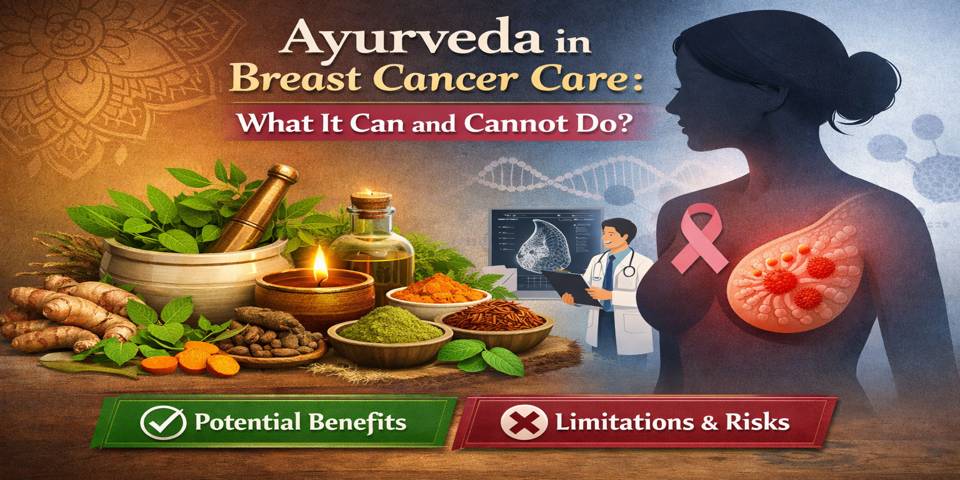
Breast cancer is a complex condition that affects not only the body but also the mind and overall quality of life. In Ayurveda, such disorders are not viewed in isolation but as a result of deep-rooted imbalances in Doshas, Dhatus, and body metabolism.
At Best ayurvedic clinic in Pune – Kalpataru Ayurved Chikitsalaya™, with over 25+ years of clinical experience, the approach is rooted in classical Ayurvedic principles—focusing on identifying the root cause, correcting internal imbalances, and restoring the body’s natural healing capacity.
Clinical Insight:
Modern cancer treatments primarily target cancer cells directly. However, one of the biggest risks in cancer is recurrence and metastasis (spread to other parts of the body). Many patients undergo chemotherapy and radiation successfully but may not focus enough on strengthening their immune system. Ayurveda emphasizes improving the body’s inherent immunity (Vyadhikshamatva), which plays a crucial role in preventing recurrence.
It is important to understand that abnormal cancer cells may form in the body regularly, but a strong immune system can identify and destroy them. When immunity weakens, these abnormal cells can continue to grow and eventually develop into tumors. Ayurvedic Rasayana therapies and medicines aim to strengthen this natural defense mechanism, helping the body resist future disease progression.
Kalpataru Ayurved Chikitsalaya™ Experience & Outcomes:
At Kalpataru Ayurved Chikitsalaya™, many breast cancer patients have experienced long-term relief through Ayurvedic treatment. There are documented cases where patients have remained recurrence-free for 8–10 years after completing treatment.
Even in challenging conditions like triple-negative breast cancer, which generally has a poorer prognosis, patients treated with Ayurvedic support have shown encouraging long-term outcomes, with several individuals living cancer-free lives for many years. These clinical observations highlight the potential of Ayurveda in improving long-term health and disease resistance.
Understanding Breast Cancer in Ayurveda:
From an Ayurvedic perspective, breast cancer can be correlated with Granthi and Arbuda (abnormal growths), primarily involving:
- Kapha Dosha – responsible for mass formation and growth
- Pitta Dosha – associated with inflammation and cellular changes
- Vata Dosha – governs spread and degeneration
Other Key Pathological Factors:
- Ama (metabolic toxins) accumulation
- Agnimandya (weak digestive fire)
- Srotorodha (blockage of microchannels)
These factors collectively disturb tissue health (Dhatu Dushti) and lead to abnormal cellular proliferation.
Ayurvedic Line of Treatment:
1. Nidana Parivarjan (Elimination of Root Cause):
A fundamental principle in Ayurveda is removing causative factors such as:
- Improper dietary habits
- Chronic stress
- Sedentary lifestyle
- Hormonal imbalances
Without correcting these, long-term healing is not sustainable.
2. Shodhana Chikitsa (Detoxification):
Based on classical texts like Charaka Samhita and Sushruta Samhita, detoxification plays a key role in managing deep-seated disorders.
Selected Panchakarma therapies may include:
- Virechana (therapeutic purgation) – for Pitta-Kapha imbalance
- Basti (medicated enema therapy) – for Vata regulation
These therapies help:
- Eliminate Ama
- Restore Dosha balance
- Improve tissue metabolism
3. Shamana Chikitsa (Pacification with Medicines):
After detoxification, specific Ayurvedic formulations are prescribed based on clinical assessment.
Commonly Used Ayurvedic Herbs & Formulations:
Kanchanar (Bauhinia variegata)
- Traditionally used in Granthi and glandular swellings
- Helps in reducing abnormal tissue growth
- Commonly used in formulations like Kanchanar Guggulu
Ashwagandha (Withania somnifera)
- Powerful Rasayana (rejuvenator)
- Enhances immunity and strength
Helps reduce stress and improves recovery
Turmeric (Haridra – Curcuma longa)
- Known for its anti-inflammatory and antioxidant properties
- Supports cellular health and detoxification
Guduchi (Tinospora cordifolia)
- Enhances Vyadhikshamatva (immunity)
- Acts as a detoxifier and metabolic regulator
Guggulu (Commiphora mukul)
- Helps in reducing growths and clearing channels
- Useful in managing Kapha-related disorders
Manjistha (Rubia cordifolia)
- Excellent blood purifier (Rakta Shodhak)
- Supports lymphatic drainage and detoxification
Varun (Crataeva nurvala)
- Traditionally used in glandular disorders
- Helps in reducing abnormal masses
Note: These medicines should only be taken under the supervision of a qualified Ayurvedic doctor. Self-medication is not recommended.
4. Rasayana Therapy (Rejuvenation):
Rasayana plays a critical role in:
- Strengthening body tissues (Dhatus)
- Enhancing immunity
- Improving overall vitality
5. Pathya-Apathya (Diet & Lifestyle Regulation):
Diet is considered a cornerstone of treatment. Patients are guided to follow:
- Light, easily digestible food
- Warm, freshly prepared meals
- Avoidance of processed, heavy, and incompatible foods
Lifestyle recommendations include:
- Regular daily routine (Dinacharya)
- Adequate sleep
- Stress reduction practices
Additional Clinical Emphasis on Diet:
At Kalpataru Ayurved Chikitsalaya™, special emphasis is given to diet because Kapha Dosha and Ama play a significant role in abnormal cell growth and excessive cell division. Therefore, it is essential to avoid foods that increase Kapha and contribute to toxin accumulation.
Patients are strictly advised to avoid dairy products, sweets, and fried foods, as these can aggravate Kapha and support disease progression. Following strict dietary discipline significantly helps in reducing the chances of recurrence.
6. Manasik Chikitsa (Mental Health Support):
Ayurveda strongly emphasizes the role of mental health. Techniques such as:
- Meditation
- Pranayama
- Mindfulness practices
help in reducing anxiety, improving emotional strength, and supporting healing.
What Ayurveda CAN Do?
- Addresses the root cause of disease rather than just symptoms
- Helps in detoxification and metabolic correction
- Strengthens immunity (Vyadhikshamatva)
- Improves strength, energy, and quality of life
- Provides a holistic and individualized treatment approach
What Ayurveda CANNOT Do?
- It is not an instant cure—requires time and consistency
- Outcomes depend on disease stage and patient compliance
- Requires strict adherence to diet, lifestyle, and medicines
- Should not be practiced without qualified medical supervision
Expert Care at Kalpataru Ayurved Chikitsalaya™:
With decades of clinical expertise, Kalpataru Ayurved Chikitsalaya™ follows a classical, evidence-informed Ayurvedic approach. Each patient receives a personalized treatment plan based on:
- Prakriti (body constitution)
- Dosha imbalance
- Disease stage and strength of the patient (Rogi Bala)
The focus is always on safe, ethical, and root-cause-based healing.
Final Thoughts:
Ayurveda offers a time-tested, holistic pathway in managing complex conditions like breast cancer by working on the body’s internal environment. Through detoxification, herbal support, and lifestyle correction, it aims to restore balance and enhance the body’s natural healing intelligence.
For those seeking a deeper, natural approach to health, Ayurveda provides not just treatment—but a way of life focused on long-term wellness.