An In‑Depth Ayurvedic Approach to Chronic Dandruff, Scalp Inflammation & Facial Scaling
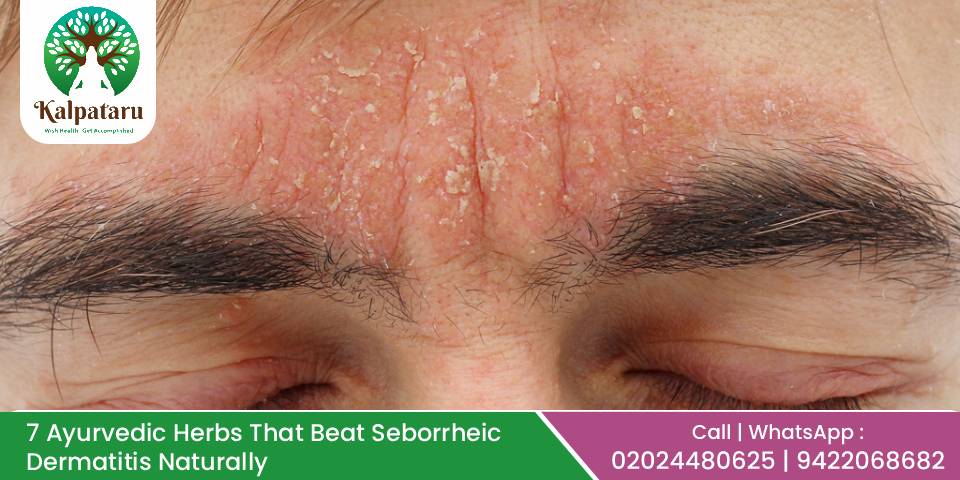
Seborrheic Dermatitis is not just a superficial skin condition. From an Ayurvedic standpoint, it is a systemic disorder that manifests externally on the scalp, face, chest, and other oil‑rich areas due to internal doshic imbalance, impaired digestion, toxin accumulation (Ama), and disturbed skin nutrition.
While modern medicine often labels it as a recurrent inflammatory condition linked to yeast overgrowth and excess sebum, Ayurveda views seborrheic dermatitis as a disorder of Twak (skin), Rakta (blood), and Meda (oil/fat tissue)—primarily involving Pitta‑Kapha aggravation.
This blog explores seven powerful Ayurvedic herbs, not just as isolated remedies, but as part of a holistic healing framework that aims to correct the root cause and reduce recurrence, an approach widely followed at Kalpataru Ayurvediya Chikitsalaya™ – Best Ayurvedic Clinic in Pune.
Understanding Seborrheic Dermatitis Through Ayurveda:
Ayurveda does not name seborrheic dermatitis exactly as such, but its clinical presentation closely resembles conditions described as:
- Kshudra Kushtha
- Sidhma Kushtha
- Vicharchika (in some cases)
Ayurvedic Pathogenesis (Samprapti):
- Mandagni (low digestive fire) → improper digestion
- Formation of Ama (metabolic toxins)
- Vitiation of Rakta and Pitta causing inflammation, redness, burning
- Involvement of Kapha and Meda causing oiliness, scaling, thick flakes
- Manifestation on scalp, face, eyebrows, ears, and chest
Therefore, effective Ayurvedic management must:
- Detoxify the body
- Balance Pitta and Kapha
- Purify blood
- Improve digestion and metabolism
- Strengthen skin immunity
Herbs play a central role in achieving these goals.
1. Neem (Azadirachta indica) – The Ultimate Skin Cleanser:
Ayurvedic Properties:
- Rasa (Taste): Tikta (bitter), Kashaya (astringent)
- Guna: Laghu (light), Ruksha (dry)
- Virya: Sheeta (cooling)
- Vipaka: Katu
Why Neem Works in Seborrheic Dermatitis?
Neem is one of Ayurveda’s most powerful Rakta‑shodhaka (blood purifiers). It directly addresses:
- Excess oiliness (Kapha)
- Inflammation and burning (Pitta)
- Microbial and fungal aggravation
Therapeutic Benefits:
- Reduces itching and redness
- Controls scalp yeast imbalance
- Prevents secondary infections
- Regulates sebaceous gland activity
How Neem Is Used?
- External: Neem leaf decoction hair wash, neem oil application
- Internal: Neem capsules or powder under supervision
Neem is especially useful during acute flare‑ups.
2. Amla (Phyllanthus emblica) – The Rejuvenator of Skin & Scalp:
Ayurvedic Properties:
- Rasa: Predominantly Amla (sour), also sweet
- Virya: Cooling
- Vipaka: Madhura
Role in Seborrheic Dermatitis:
Amla pacifies Pitta without aggravating Kapha, making it ideal for chronic inflammatory skin conditions. It nourishes Rasa and Rakta Dhatus, which are essential for healthy skin turnover.
Therapeutic Benefits:
- Reduces chronic inflammation
- Improves scalp immunity
- Strengthens hair roots
- Delays recurrence
How Amla Is Used:
- Internal consumption as juice, powder, or in formulations
- External use as scalp packs or medicated oils
Amla is particularly beneficial in patients with burning sensation, redness, hair fall, and stress‑related flares.
3. Turmeric (Curcuma longa) – The Anti Inflammatory Healer:
Ayurvedic Properties:
- Rasa: Katu (pungent), Tikta
- Virya: Ushna (heating)
- Vipaka: Katu
Why Turmeric Is Effective?
Though heating in nature, turmeric acts as a deep anti‑toxin herb when used correctly. It improves circulation, clears Ama, and heals inflamed tissues.
Therapeutic Benefits:
- Reduces redness and scaling
- Heals micro‑lesions from scratching
- Improves skin texture
- Supports gut‑skin axis
Usage Guidelines:
- Internal use in controlled doses
- External application mixed with cooling agents like aloe vera or sandalwood
Turmeric should be used cautiously in highly Pitta‑dominant individuals.
4. Giloy (Tinospora cordifolia) – The Immunity Modulator:
Ayurvedic Properties:
- Rasa: Tikta, Kashaya
- Virya: Ushna
- Vipaka: Madhura
Importance in Seborrheic Dermatitis:
Giloy works at the root of chronic recurrence by improving immune tolerance and reducing hypersensitivity reactions.
Therapeutic Benefits:
- Detoxifies blood
- Reduces stress‑induced flares
- Improves resistance to infections
- Supports long‑term remission
Best Use:
Giloy juice or tablets as internal detox therapy
Giloy is ideal for patients with recurrent, stress‑triggered seborrheic dermatitis.
5. Daru halad (Berberis aristata) – The Pitta Kapha Regulator:
Ayurvedic Properties:
- Rasa: Tikta, Kashaya
- Virya: Ushna
Why It Is Important?
Daruharidra is particularly effective in oily, inflamed, and infected skin conditions. It works synergistically with neem and turmeric.
Therapeutic Benefits:
- Reduces excessive oil secretion
- Controls microbial overgrowth
- Improves skin clarity
Usage:
- External pastes or washes
- Internal formulations under supervision
6. Mulethi (Glycyrrhiza glabra) – The Soothing & Cooling Herb:
Ayurvedic Properties:
- Rasa: Madhura (sweet)
- Virya: Sheeta
- Vipaka: Madhura
Role in Seborrheic Dermatitis:
Mulethi is excellent for burning, itching, redness, and sensitivity, especially in facial seborrheic dermatitis.
Therapeutic Benefits:
- Calms aggravated Pitta
- Reduces itching
- Improves skin hydration
- Supports hormonal balance
Usage:
- External soothing pastes
- Internal decoctions in small doses
7. Triphala – The Foundation of Ayurvedic Skin Healing:
Composition:
- Amla
- Haritaki
- Bibhitaki
Why Triphala Is Essential?
Seborrheic dermatitis cannot be cured without correcting digestion and elimination. Triphala ensures:
- Proper bowel movement
- Removal of Ama
- Healthy metabolism
Therapeutic Benefits:
- Prevents toxin accumulation
- Improves gut‑skin connection
- Reduces recurrence
Usage:
Taken at night with warm water
Local Application:
Local application is also an essential part of the Ayurvedic treatment of seborrheic dermatitis. In local therapy, four types of medicines are commonly used: Triphala, turmeric, unchi kachora, jashtha madh, and daru halad (Berberis aristata). These medicines are mixed with curd and honey and applied directly to the affected skin.
After application, specific herbal powders are used to gently cleanse the area. This process helps in removal of dead skin cells, reduces scaling, and significantly improves itching, redness, and inflammation.
In addition, a specialized Kerala Panchakarma procedure called Takradhara is used in chronic and recurrent cases. In this therapy, medicated buttermilk is poured in a continuous stream over the scalp. Stems of forest‑grown plants such as Avalkathi, Gulvel, and similar herbs are traditionally used as part of this procedure.
Takradhara is performed strictly under the supervision of experienced Ayurvedic doctors. This therapy provides deep scalp relief and reduce infection.
Why Herbs Alone Are Not Enough?
Ayurveda emphasizes Pathya‑Apathya (diet and lifestyle discipline) along with herbs.
Key Lifestyle Recommendations:
- Avoid spicy, oily, fermented foods
- Reduce sugar and refined carbs
- Manage stress through yoga and pranayama
- Avoid hot water head baths
- Maintain scalp hygiene without over‑washing
Final Thoughts:
Seborrheic Dermatitis is a chronic but manageable condition when approached holistically. Ayurvedic herbs do not merely suppress symptoms—they restore balance, strengthen immunity, detoxify the system, and improve skin resilience.
When used judiciously under expert guidance, herbs like Neem, Amla, Giloy, Turmeric, Daruharidra, Mulethi, and Triphala can offer long‑lasting relief and significantly reduce recurrence.
For best results, Ayurvedic treatment should always be individualized based on Prakriti (constitution), severity, and chronicity.
For personalized Ayurvedic management of seborrheic dermatitis, consult an experienced Ayurvedic physician rather than self‑medicating.