
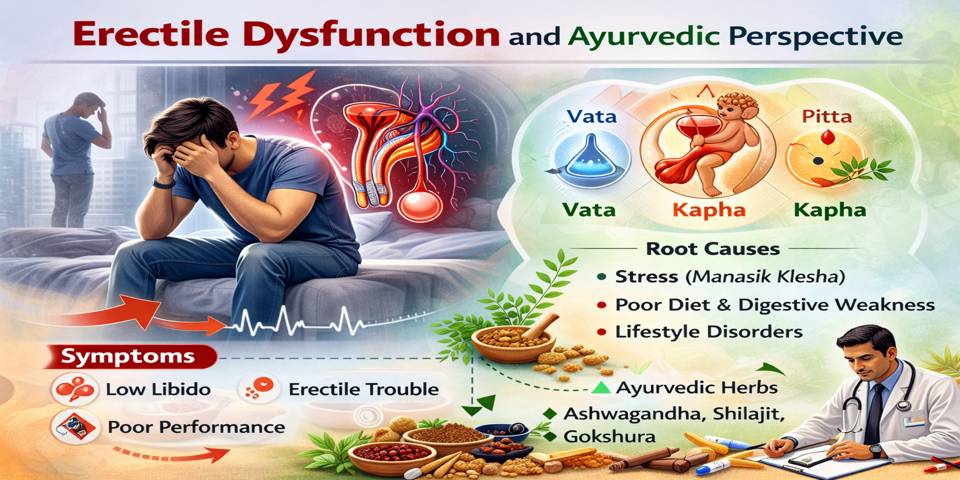
Erectile Dysfunction (ED) is often thought of as a condition affecting older men. However, recent clinical observations and studies suggest that a significant number of men under 40 are also experiencing erectile difficulties. Unlike age-related ED, erectile dysfunction in young men often has different triggers, deeper psychological involvement, and unique lifestyle contributors.
Understanding ED in youngsters requires a dual approach—modern medical science to evaluate physiological causes and Ayurveda to understand the imbalance in body energies (Doshas), mental health, and lifestyle habits.
Let’s explore this growing issue comprehensively.
What is Erectile Dysfunction?
Erectile Dysfunction is the persistent inability to achieve or maintain an erection sufficient for satisfactory sexual performance. Occasional difficulty is normal. However, when it becomes frequent and begins affecting confidence or relationships, it needs attention.
In young men, ED is rarely due to severe vascular disease. Instead, it is commonly linked to psychological stress, lifestyle patterns, hormonal imbalance, and behavioral habits.
Modern Science Perspective: Why Are Young Men Facing ED?
1. Psychological Stress & Performance Anxiety:
In younger individuals, the most common cause of ED is psychological. Academic pressure, job stress, financial concerns, relationship instability, and unrealistic expectations from social media or pornography create chronic stress.
Stress increases cortisol levels, which suppress testosterone and impair nitric oxide activity—essential for erection.
Performance anxiety further worsens the cycle:
Fear of failure → Anxiety → Poor erection → Reduced confidence → Repeat anxiety.
This vicious cycle can lead to psychogenic ED.
2. Porn-Induced Erectile Dysfunction (PIED):
Excessive exposure to high-intensity online sexual content alters brain reward pathways. The dopamine surge associated with pornography may:
- Reduce sensitivity to real-life sexual stimuli
- Create unrealistic expectations
- Lower arousal response with a partner
This condition, increasingly recognized globally, is termed Porn-Induced ED.
3. Sedentary Lifestyle & Obesity:
Lack of physical activity reduces:
- Blood circulation
- Testosterone production
- Endothelial function (lining of blood vessels)
Young professionals working long hours on laptops are especially vulnerable. Early metabolic syndrome, obesity, and insulin resistance are now seen even in men in their 20s and 30s.
4. Hormonal Imbalance:
Low testosterone is no longer limited to older men. Contributing factors include:
- Sleep deprivation
- Excessive alcohol
- Stress
- Obesity
- Anabolic steroid misuse
Testosterone plays a crucial role in libido, mood, and erectile strength.
5. Substance Abuse:
Smoking, vaping, alcohol, recreational drugs, and anabolic steroids damage blood vessels and disrupt hormonal balance.
- Nicotine narrows blood vessels.
- Alcohol suppresses testosterone.
- Steroids shrink natural hormone production.
6. Digital Overstimulation & Sleep Disturbance:
Late-night screen exposure suppresses melatonin and disrupts circadian rhythm. Poor sleep lowers testosterone and increases stress hormones.
Chronic sleep deprivation directly correlates with erectile difficulties in young adults.
Ayurvedic Perspective: Understanding ED in Young Men:
In Ayurveda, sexual health is governed by Shukra Dhatu (reproductive tissue) and the balance of Vata, Pitta, and Kapha Doshas.
Erectile dysfunction in youngsters is often categorized under:
- Klaibya (sexual weakness)
- Dhatukshaya (tissue depletion)
- Shukra Kshaya (depletion of reproductive essence)
- Manasika Hetu (psychological causes)
1. Vata Aggravation – The Major Culprit:
Young individuals today live a Vata-aggravating lifestyle:
- Irregular meals
- Excess travel
- Night awakening
- Overthinking
- Excessive sexual stimulation
- Anxiety and worry
Vata imbalance causes:
- Weak nerve conduction
- Premature ejaculation
- Difficulty sustaining erection
- Mental restlessness
2. Shukra Dhatu Kshaya (Depletion of Reproductive Tissue):
According to Ayurvedic physiology, Shukra Dhatu is the final product of nourishment of all seven tissues.
Excessive masturbation, frequent ejaculation, mental stress, poor diet, and lack of proper nutrition weaken Shukra Dhatu.
Symptoms include:
- Fatigue after intercourse
- Reduced erection strength
- Lack of confidence
- Low libido
3. Ojas Depletion:
Ojas represents immunity, vitality, and life force.
Chronic stress, addiction, and irregular lifestyle deplete Ojas, resulting in:
- Weak stamina
- Emotional instability
- Sexual debility
4. Agnimandya (Poor Digestive Fire):
Ayurveda emphasizes that improper digestion leads to Ama (toxins), which block bodily channels (Srotas). When channels supplying Shukra Dhatu are blocked, erectile function suffers.
Modern parallel: Poor gut health → inflammation → endothelial dysfunction → impaired erection.
Key Differences: ED in Young vs Older Men:
Warning Signs Young Men Should Not Ignore:
- Frequent difficulty despite strong desire
- Morning erections reduced
- Loss of sexual confidence
- Fatigue after mild activity
- Reduced libido
Early intervention prevents chronic psychological impact.
Holistic Management Approach:
Modern Scientific Measures
- Hormonal profile (Testosterone, Prolactin, Thyroid)
- Blood sugar screening
- Lipid profile
- Lifestyle assessment
- Psychological counseling if required
Mild cases often improve with:
- Exercise
- Sleep correction
- Stress reduction
- Porn detox
⚠ Important Caution Regarding Self-Medication and Online Products:
Many young men, instead of consulting a proper medical professional, try over-the-counter medications or online products advertised for sexual performance enhancement. However, the exact ingredients in such products are often unknown. In the name of Ayurvedic medicine, many products are adulterated with modern pharmaceutical drugs without proper disclosure, creating a false belief that one is consuming safe herbal treatment.
It is important not to fall prey to advertisements or marketing temptations. Proper consultation with a qualified Ayurvedic consultant is essential before starting any treatment.
Medications containing Sildenafil Citrate, commonly sold under categories like Viagra or Penegra, are often available over the counter and may produce temporary results. However, these medicines can also have side effects, and their benefits are usually short-term rather than curative.
Instead of relying on such temporary solutions, safe and scientifically practiced Ayurvedic formulations—proven effective in many patients—are prescribed at Kalpataru Ayurved Chikitsalaya. These herbal medicines have helped many individuals correct erectile dysfunction and early ejaculation complaints effectively within a shorter duration, while supporting long-term vitality and health.
Ayurvedic Management for Young ED:
1. Rasayana Therapy (Rejuvenation):
Strengthens tissues and restores vitality:
- Ashwagandha
- Safed Musli
- Gokshura
- Kapikacchu
- Shilajit
These improve Shukra Dhatu quality and nerve strength.
2. Vajikarana Therapy:
A specialized Ayurvedic branch focused on sexual wellness and vitality enhancement.
It improves:
- Erectile strength
- Libido
- Confidence
- Stamina
3. Panchakarma (If Needed):
In selected patients:
- Basti (medicated enema) for Vata balance
- Abhyanga for nervous system relaxation
- Shirodhara for anxiety reduction
4. Diet Recommendations for Young Men:
- Warm, nourishing foods
- Cow’s ghee in moderation
- Soaked almonds
- Dates
- Black raisins
- Milk with appropriate herbs
Avoid excessive junk, processed, and cold foods.
5. Lifestyle Correction (Very Important):
- Sleep before 11 PM
- Avoid excessive screen exposure
- Regular exercise (yoga + strength training)
- Limit pornography
- Practice mindfulness and pranayama
- Maintain healthy body weight
The Psychological Angle: Confidence Matters:
Young men often suffer silently due to embarrassment. Social media and unrealistic expectations worsen performance anxiety.
Important reminder:
Occasional failure does NOT define masculinity.
Addressing ED early improves not just sexual health, but mental well-being and relationships.
When Should a Young Man Seek Help?
- Persistent symptoms for 2–3 months
- Associated anxiety or depression
- Suspected hormonal imbalance
- Reduced morning erections
- Impact on relationship
Early professional consultation prevents long-term complications.
Conclusion:
Erectile dysfunction in youngsters is not rare anymore. Modern stress, digital overstimulation, poor sleep, and lifestyle imbalances have significantly contributed to rising cases.
From a modern medical perspective, the focus is on hormonal balance, vascular health, and psychological well-being. From an Ayurvedic perspective, restoring Vata balance, strengthening Shukra Dhatu, and rejuvenating Ojas are central to treatment.
The good news?
Young-age ED is highly reversible with timely intervention, proper guidance, and disciplined lifestyle correction.
Breaking the stigma and seeking help early can transform not just sexual health, but overall vitality and confidence.
Book an appointment today with Dr. Manoj Deshpande at Kalpataru Ayurvediya Chikitsalaya™ – Best Ayurvedic Clinic in Pune and take the first step towards natural healing, renewed confidence, and long-term wellness.