
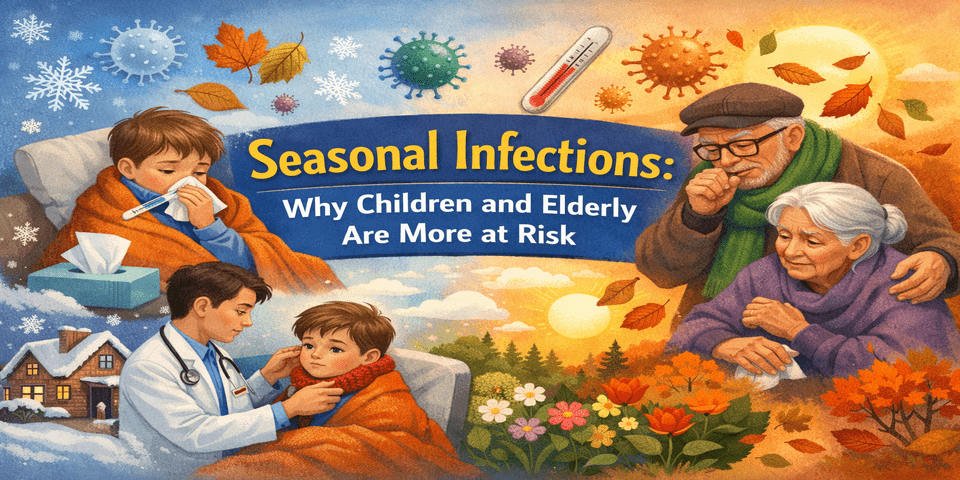
As seasons change, we often notice a rise in common illnesses such as cold, cough, fever, throat infections, stomach upsets, and viral fevers. While anyone can fall sick during this time, children and elderly people are especially vulnerable.
Ayurveda explains this increased risk beautifully through the concepts of Dosha imbalance, reduced immunity (Ojas), and weaker digestive fire (Agni). Let’s understand why these age groups suffer more and how Ayurveda helps protect them naturally.
Understanding Seasonal Infections Through Ayurveda:
According to Ayurveda, every season influences our internal balance of Vata, Pitta, and Kapha doshas. When seasons shift, these doshas become disturbed, weakening immunity and allowing infections to develop.
Classical Ayurvedic texts like Charaka Samhita emphasize that low Ojas (vital immunity energy) makes the body more susceptible to external pathogens.
Seasonal changes also reduce Agni (digestive fire), leading to toxin accumulation (Ama). This creates a perfect environment for infections to thrive.
Why Children Are More Prone to Seasonal Illness?
In Ayurveda, childhood is dominated by Kapha dosha, which naturally brings softness, moisture, and growth — but also makes children prone to mucus-related problems.
Key reasons:
- Immature immune system (low Ojas)
- Underdeveloped digestion (Mandagni)
- Higher Kapha leading to congestion
- Frequent exposure in schools and play areas
- Common seasonal problems in children:
- Recurrent cold and cough
- Tonsillitis
- Fever
- Diarrhea
- Skin allergies
Ayurveda considers childhood immunity to be developing, which is why repeated infections are common unless proper nourishment and preventive care are given.
Children with low immunity who fall sick frequently should strictly avoid junk food, fast food, and foods containing preservatives. Restaurant dishes often contain additives, artificial colors, and flavor enhancers that can trigger allergies such as skin rashes, cold, cough, fever, or stomach upset. It is also important to avoid frequent intake of refrigerated water, cold foods, curd, and sour items, as these can lead to upper respiratory tract infections that may later develop into serious conditions like tonsillitis, adenoids, or bronchitis.
Exercise and physical activity are extremely important in children’s lives. The more time children spend sitting in one place using the internet, social media, or playing online games, the less physical movement they get. Reduced activity can lead to weight gain, poor digestion, and formation of Ama (toxic buildup) in the body, which weakens immunity. Therefore, children should regularly participate in some form of exercise, outdoor sports, or activities like dance to maintain good health and strong immunity.
Suvarnaprashan is an important Ayurvedic immunity-enhancing practice, and research has been conducted in various universities regarding its benefits. The Suvarnaprashan ritual is not that effective if given only once on Pushya Nakshatra. For proper benefits, these medicated drops should be given continuously for one, two, or three months. These drops are prepared using honey and ghee, along with gold (Suvarna) and herbs like Vacha, Brahmi, and Shankhapushpi, which support brain function and immunity. Research suggests that it not only improves immunity but also enhances memory and learning ability. Currently, many FDA-approved companies manufacture these drops, and when given under medical supervision, they can significantly help reduce seasonal infections in children.
From early childhood, healthy eating habits should be developed. Diet should include salads, fruits, seeds, roasted grams, and puffed grains, as these help reduce excess Kapha. To improve protein intake, soybeans and soya chunks are beneficial. Children who consume non-vegetarian food can be given eggs. Additionally, roasted sesame seeds, flaxseeds, dry fruits, cashews, black raisins, charoli, and edible gum (dink) are highly 0onutritious and help strengthen immunity.
Why Elderly People Fall Sick Easily?
Old age is ruled by Vata dosha, which brings dryness, weakness, and degeneration.
Major contributing factors:
- Declining Ojas (immunity)
- Weak digestion and nutrient absorption
- Reduced tissue strength
- Existing chronic illnesses
- Poor sleep and stress
- Common seasonal issues in elderly:
- Respiratory infections
- Joint pain flare-ups
- Urinary infections
- Digestive disturbances
- Fatigue and weakness
Ayurveda describes aging as a natural depletion phase, making seniors more sensitive to climatic changes.
In elderly individuals, Vata dosha is dominant, leading to higher degeneration in the body. Along with Rasayana therapy, Vajikarana therapy can be beneficial. Vajikarana therapy is not only meant to improve sexual strength, but it also nourishes all body tissues (Dhatus). It helps increase strength, improves muscle and bone health, and supports overall immunity. Therefore, Vajikarana along with Rasayana therapy is highly beneficial for elderly individuals.
To slow down age-related degeneration and improve declining immunity, elderly people should include urad dal, raisins, charoli, onion, amla, cashews, almonds, and walnuts in their diet. They can also consume one to two teaspoons daily of Panchamrut, a mixture made from curd, milk, ghee, honey, and sugar, which helps in strengthening immunity.
Ayurvedic View of Immunity (Ojas):
Ojas is the essence of all body tissues. When Ojas is strong, the body resists disease naturally.
Low Ojas leads to:
- Frequent infections
- Slow recovery
- Mental fatigue
- Poor appetite
Therefore, Ayurveda focuses on building Ojas rather than only treating symptoms.
Ayurvedic Preventive Measures for Seasonal Infections:
Here are simple yet powerful Ayurvedic practices suitable for both children and elderly:
Strengthen Digestive Fire (Agni):
- Eat warm, freshly cooked meals
- Avoid cold drinks and packaged food
- Include ginger, cumin, and turmeric
Daily Immunity Boosters:
- Honey (for children above 1 year)
- Turmeric milk at night
- Tulsi or ginger tea
Follow Ritucharya (Seasonal Routine):
Ayurveda strongly recommends adjusting diet and lifestyle according to seasons:
- Light food in the monsoon
- Nourishing food in winter
- Cooling food in summer
- Abhyanga (Oil Massage)
Regular warm oil massage improves circulation, calms Vata, and strengthens immunity — especially useful for elderly people.
Adequate Sleep and Rest:
Proper sleep helps restore Ojas and supports faster healing.
Yoga and Pranayama:
Yoga and pranayama are extremely important for strengthening the respiratory system. Practices like Nadi Shodhana, Anulom-Vilom, Bhramari, and Omkar improve lung capacity. Immunity largely depends on lung efficiency. When a person can inhale more oxygen and effectively remove carbon dioxide, infections reduce faster. Regular practice also strengthens the heart and helps elderly individuals reduce frequent seasonal illnesses.
Rasayana Therapy – Ayurveda's Rejuvenation Science:
Ayurveda offers Rasayana therapies to rebuild immunity and vitality. Herbs like Ashwagandha, Guduchi, Amalaki, and Shatavari are traditionally used to enhance resistance against infections (always under medical supervision).
When to Seek Ayurvedic Medical Help?
Consult an Ayurvedic doctor if there are:
- Repeated infections
- Poor appetite
- Slow growth in children
- Persistent fatigue in elderly
- Chronic respiratory or digestive issues
- Early intervention prevents complications and improves long-term health.
Final Thoughts:
From an Ayurvedic perspective, seasonal infections are not just caused by viruses or weather — they are signals of internal imbalance.
Children and elderly are more vulnerable because their Ojas and Agni are naturally weaker. By following Ayurvedic routines, strengthening digestion, nurturing immunity, maintaining proper diet, physical activity, and practicing yoga regularly, we can significantly reduce seasonal illness and improve quality of life.
Ayurveda teaches us that prevention is the best medicine — and small daily habits can create powerful protection.
Consult the Best Ayurvedic Clinic in Pune – Dr. Manoj Deshpande, Kalpataru Ayurvediya Chikitsalaya™. Call +919422068682 / +919764837167 / 02024480625 or click on Book an Appointment today.