
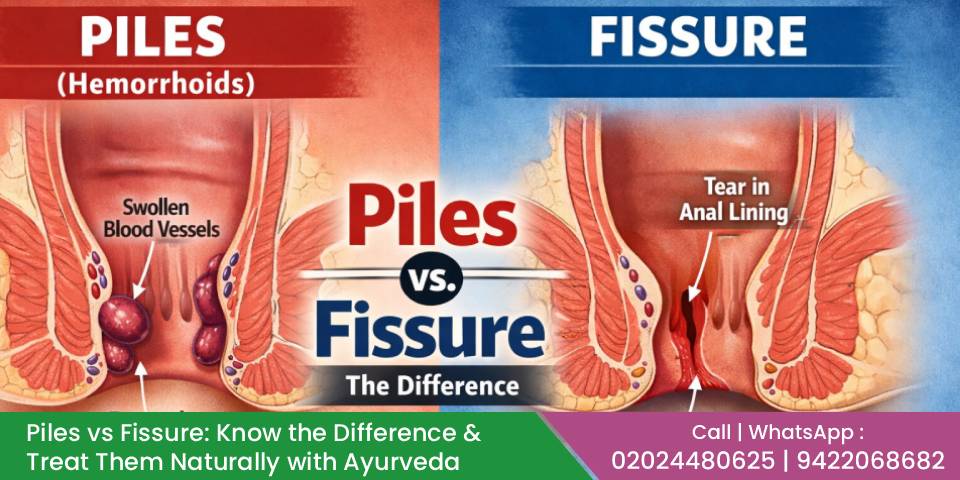
Problems like piles (hemorrhoids) and anal fissure are very common today due to sedentary lifestyle, irregular and wrong food habits, stress, heredity, and poor digestion. Because both cause pain and bleeding during bowel movements, many people get confused between the two. Understanding the difference between piles and fissure is very important, because the treatment approach is different. Ayurveda offers safe, natural, and long-term solutions for both conditions without surgery in most cases. At Kalpataru Ayurvediya Chikitsalaya™, we specialize in treating piles and fissure with authentic Ayurvedic therapies focused on root-cause healing and long-term relief.
What Are Piles (Hemorrhoids)?
Piles are swollen and inflamed blood vessels in or around the anus and rectum. They develop due to increased pressure in the rectal area.
Common Causes of Piles:
- Chronic constipation
- Straining during bowel movements
- Sitting for long hours
- Low-fiber diet
- Obesity
- Pregnancy
- Poor digestive fire (Mandagni – as per Ayurveda)
Symptoms of Piles:
- Painless bleeding while passing stools
- Bright red blood in the toilet or on a tissue
- Itching or irritation around the anus
- Swelling or lump near the anus
- Discomfort while sitting
- Pain is usually mild or absent, especially in early piles.
What Is an Anal Fissure?
An anal fissure is a small tear or cut in the lining of the anus.It usually occurs due to passing hard or dry stools.
Common Causes of Fissure:
- Severe constipation
- Hard stools
- Frequent diarrhea
- Trauma during delivery
- Excessive strain while passing stool
Symptoms of Fissure:
- Severe burning or cutting pain during and after bowel movement
- A small amount of bleeding
- Spasm or tightness of the anal muscles
- Fear of passing stools due to pain
- Pain is intense and long-lasting, which is the key difference from piles.
Piles vs Fissure: Key Differences at a Glance
Ayurvedic Understanding of Piles & Fissure:
- Piles (Arsha) occur due to an imbalance of Vata, Pitta, and Kapha, weak digestion, and accumulation of toxins (Ama).
- Fissure (Parikartika) is mainly caused by aggravated Vata and Pitta, leading to dryness, cracking, and pain.
Ayurveda treats the root cause, not just the symptoms.
Natural Ayurvedic Treatment Approaches:
The Importance of Anupan (Vehicle for Medicine):
In Ayurveda, Anupan (what you take the medicine with) is crucial.
- Medicines for piles and fissure should be taken before meals during ‘Apan Kaal’.
- Taking these with half a cup of warm milk and one teaspoon of ghee helps reduce swelling, heat, wounds, bleeding, and burning sensations while increasing the effectiveness of the medicine.
Specialized Oil Treatments:
A specific oil made from Tamarind (Chincha), Sweet Oil, and Saindhav (Himalayan Salt) is used at Kalpataru Ayurveda Clinic.
- It reduces dryness in the intestines.
- It increases lubrication (Snigdhata) in the rectum and large intestine, which helps eliminate the tendency toward constipation—a primary causative factor for these diseases.
- This oil can be taken orally or used for Basti (Ayurvedic Enema).
Sitz Bath and Leech Therapy:
- Sitz Bath (Tub Bath): Using herbal decoctions like Panchvalkal or Triphala helps reduce local swelling and inflammation.
- Jalaukavacharan (Leech Application): Effective for painful blood vessel swelling in the anal area, stopping the pain immediately and helping cases that might otherwise require surgery.
Diet Tips for Both Piles & Fissure:
Eat More:
- Suran (Elephant Foot Yam): This vegetable is highly important for anorectal diseases; it acts more like a medicine than just food and should be consumed frequently.
- Dry Fruits: Almonds, walnuts, black raisins, and figs are very useful.
- Almond Oil: Taking almond oil mixed in warm milk helps heal wounds, swelling, and pain in the anal area.
- Green leafy vegetables and fruits like papaya and pear.
- Whole grains, buttermilk, and warm water.
Avoid:
- Spicy, fried, and junk food.
- Alcohol and excess tea/coffee.
- Late-night meals.
Specific Helpful Herbs:
Several herbs are particularly effective for both piles and fissures:
- Shatavari
- Yashtimadhu
- Mochras
- Sarjaras
- Haritaki
- Amalaki
- Suvarna Gairik
- Nagkesar
Can Piles and Fissures Be Cured Without Surgery?
Yes, most early and moderate cases can be successfully treated with Ayurvedic medicines, diet correction, and lifestyle changes.
Surgery is usually needed only when:
- Condition is very advanced
- There are complications
- Long-term neglect has occurred
- Early treatment gives the best results naturally.
When Should You Consult a Doctor?
- Persistent bleeding
- Severe pain while passing stools
- Symptoms lasting more than 1–2 weeks
- Recurrent episodes
- Do not self-medicate for long periods.
Conclusion:
Though piles and fissure appear similar, they are different conditions and require different treatment approaches. Ayurveda offers a holistic, safe, and effective solution by correcting digestion, healing tissues, and preventing recurrence.
Early diagnosis + Ayurvedic care = Long-term relief without surgery.
Don’t ignore the symptoms. Book your appointment today with Dr. Manoj Deshpande and Dr. Aparna Deshpande at Kalpataru Ayurvediya Chikitsalaya™ – trusted as one of the best Ayurvedic clinics in Pune for piles, fissure, and anorectal disorders.
- Call Now: +91 94220 68682 / +91 97648 37167 / 020-24480625
- Request your consultation and begin your journey toward natural, long-term healing.