
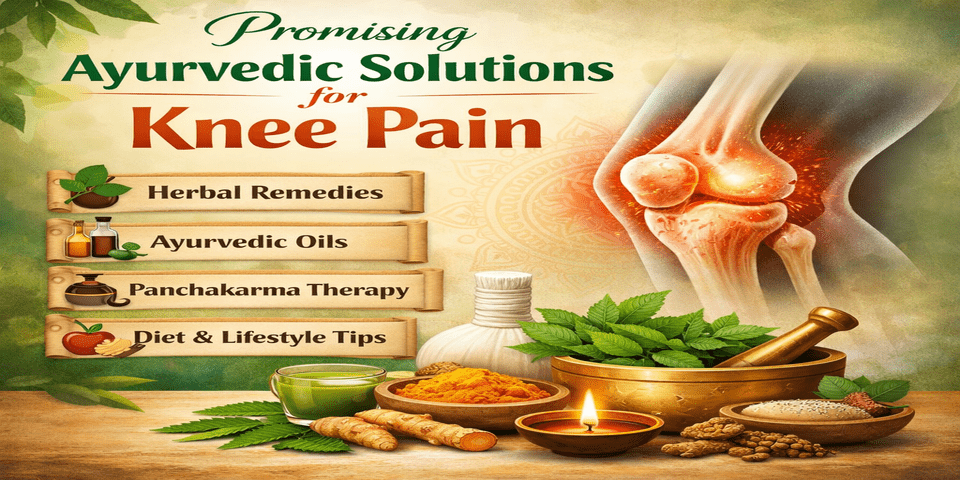
Knee pain has become one of the most common health problems today, affecting people of all ages—especially those above 40, overweight individuals, athletes, and people with sedentary lifestyles. Many patients rely on painkillers, injections, or eventually knee replacement surgery. While these treatments may provide relief, they often focus mainly on symptom control rather than addressing the root cause.
Ayurveda, the ancient Indian system of medicine, offers a holistic and natural approach to managing knee pain and osteoarthritis. It focuses not only on reducing pain but also on improving joint strength, mobility, and long-term joint health.
This blog explains knee pain causes, limitations of conventional treatments, and promising Ayurvedic solutions that can help manage knee pain naturally and effectively.
Understanding Knee Pain and Osteoarthritis:
The most common cause of chronic knee pain is osteoarthritis, a degenerative condition where the cartilage cushioning the knee joint gradually wears down.
Common causes of knee pain include:
- Age-related cartilage degeneration
- Obesity and excess body weight
- Sedentary lifestyle
- Previous injuries
- Muscle weakness
- Poor posture
- Overuse or repetitive strain
When cartilage wears out, bones start rubbing against each other, causing:
- Pain
- Stiffness
- Swelling
- Reduced mobility
- Difficulty walking or climbing stairs
Modern medicine recognizes exercise, weight loss, physiotherapy, medications, and injections as non-surgical treatments, while knee replacement is considered in severe cases.
However, many patients seek safer, long-term, and natural alternatives—this is where Ayurveda plays an important role.
Limitations of Conventional Treatments:
1. Painkillers:
Painkillers reduce pain temporarily but do not repair damaged cartilage. Long-term use may cause:
- Gastric irritation
- Kidney problems
- Liver issues and dependence on pain killers
2. Knee Injections:
Steroid or lubricating injections may provide temporary relief, but the effects often wear off.
3. Knee Replacement Surgery:
Surgery is helpful in advanced cases, but it involves:
- High cost
- Surgical risks
- Recovery time
- Artificial joint lifespan limitations
Therefore, many patients prefer to explore non-surgical and natural approaches first.
Knee Pain in Ayurveda: Understanding the Root Cause
In Ayurveda, knee osteoarthritis is known as Sandhigata Vata.
According to Ayurvedic principles:
- Vata dosha imbalance causes dryness, degeneration, and joint pain
- Loss of joint lubrication leads to stiffness and cracking sounds
- Weak digestion and toxin accumulation (Ama) worsen joint inflammation
Ayurveda focuses on:
- Balancing Vata dosha
- Improving joint lubrication
- Reducing inflammation
- Strengthening bones and muscles
- Preventing further degeneration
Promising Ayurvedic Solutions for Knee Pain:
Ayurveda uses a combination of therapies, herbs, diet, and lifestyle correction for comprehensive healing.
1. Panchakarma Therapies for Joint Rejuvenation:
Panchakarma therapies are specialized detoxification and rejuvenation treatments.
Common therapies include:
Janu Basti:
Warm medicated oil is retained over the knee joint.
Benefits:
- Improves joint lubrication
- Reduces stiffness
- Nourishes cartilage
- Improves mobility
Abhyanga (Therapeutic Oil Massage):
Massage with medicated oils improves circulation and reduces inflammation.
Swedana (Herbal Steam Therapy):
Helps relieve stiffness and enhances flexibility.
Basti (Medicated Enema Therapy):
Considered one of the most effective treatments for Vata disorders.
Clinical studies show multimodal Ayurvedic regimens including therapies like Janu Basti and herbal medicines are being evaluated for long-term osteoarthritis management using validated medical parameters.
2. Effective Ayurvedic Herbs and Medicines:
Ayurvedic herbs have natural anti-inflammatory and joint-protective properties.
Common herbs include:
- Shallaki (Boswellia)
- Guggulu preparations (Yograj Guggulu, Trayodasanga Guggulu)
- Ashwagandha
- Rasna
- Nirgundi
- Dashmool
- Laksha
- Padmkashtha
- Mandoor
A clinical study showed that Ayurvedic medicines like Trayodasanga Guggulu combined with medicated oil application significantly reduced pain, improved mobility, and enhanced quality of life in knee osteoarthritis patients, with good safety profiles.
3. Medicated Oil Applications:
Ayurvedic oils such as:
- Sahacharadi Taila
- Mahanarayan Taila
- Dhanwantharam Taila
- Balashvgandhadi Tail
- Mashsaindhav Tail
help by:
- Lubricating joints
- Reducing inflammation
- Strengthening surrounding muscles
Regular application improves flexibility and reduces stiffness.
4. Diet and Lifestyle Correction:
Ayurveda emphasizes correcting internal imbalances.
Recommended dietary habits:
- Warm, freshly cooked food
- Anti-inflammatory foods
- Adequate hydration
- Avoid cold, dry, processed foods
Lifestyle recommendations:
- Regular exercise, especially legs muscle strengthening
- Yoga (with proper advice)
- Weight management
Scientific evidence confirms that physical activity significantly reduces knee pain, improves function, and enhances quality of life in osteoarthritis patients.
5. Yoga and Therapeutic Exercises:
Gentle yoga and strengthening exercises help by:
- Improving muscle strength
- Reducing joint stress
- Enhancing flexibility
- Preventing further degeneration
Exercises are considered one of the most important long-term strategies for managing knee pain.
6. Additional Effective Panchakarma and Panchakarma-Supportive Therapies:
Several specialized Panchakarma and Panchakarma-supportive treatments are highly effective in reducing knee pain and swelling and improving joint health.
Agnikarma Therapy:
This treatment uses a specially designed heated metallic instrument, traditionally made of gold (Swarna Shalaka).
Benefits:
- Provides quick relief from stiffness
- Reduces knee pain effectively
- Improves joint function
Vedhan Therapy (Ayurvedic Acupuncture):
This is a specialized Ayurvedic acupuncture technique used for pain management.
Benefits:
- Highly effective in reducing knee pain
- Helps improve nerve stimulation and circulation
Jalaukavacharan (Leech Therapy):
This therapy is recommended when there is severe swelling or signs of blood impurity (Rakta Dushti).
Benefits:
- Reduces swelling
- Relieves pain
- Improves local circulation
Pinda Sweda (Medicated Bolus Therapy):
In this therapy, Shashtika Shali rice is cooked in milk and an herbal decoction to prepare a medicated bolus. This bolus is rubbed over the knee and the surrounding area with moderate pressure.
Benefits:
- Nourishes joint tissues
- Improves strength and flexibility
- Reduces stiffness
Patra Pinda Sweda (Herbal Leaf Bolus Therapy):
This therapy uses medicinal leaves such as castor leaves and other Vata- and Kapha-reducing herbs, which are processed in medicated oil and applied to the knee.
Benefits:
- Reduces inflammation
- Improves mobility
- Strengthens joints
These therapies work together to improve overall knee joint health, reduce pain and swelling, and support long-term joint function.
Advantages of Ayurvedic Treatment for Knee Pain:
Compared to temporary solutions, Ayurveda offers several benefits:
- Natural and holistic approach
- Addresses root cause
- Improves joint lubrication
- Reduces inflammation
- Improves mobility
- Helps delay or avoid surgery in many cases
- Minimal side effects when supervised by qualified practitioners
Ayurveda combines diet, herbal medicines, therapies, and lifestyle changes to provide comprehensive joint care.
When Should You Consider Ayurvedic Treatment?
Ayurveda is especially beneficial if you have:
- Early-stage osteoarthritis
- Chronic knee pain
- Knee stiffness
- Difficulty walking
- Desire to avoid surgery
- Recurring knee pain despite medications
Even patients with moderate osteoarthritis may benefit from Ayurvedic treatment combined with exercise and lifestyle correction.
When Surgery May Still Be Necessary?
In advanced cases where:
- Cartilage is completely lost
- Severe deformity exists
- Extreme pain affects daily life
Surgery may still be required. However, Ayurveda can still help improve recovery, reduce pain, and enhance joint function.
Conclusion:
Knee pain does not always mean lifelong painkillers or immediate knee replacement surgery. Ayurveda offers promising, safe, and natural solutions that address the root cause of joint degeneration.
Through therapies like Panchakarma, herbal medicines, medicated oils, diet correction, and exercise, Ayurveda helps:
- Reduce pain naturally
- Improve joint mobility
- Strengthen joints
- Slow disease progression
- Improve overall quality of life
With proper Ayurvedic treatment and lifestyle changes, many patients can effectively manage knee pain and maintain active, healthy lives without relying solely on painkillers or surgery.